
Introduction: The Five-Second Challenge
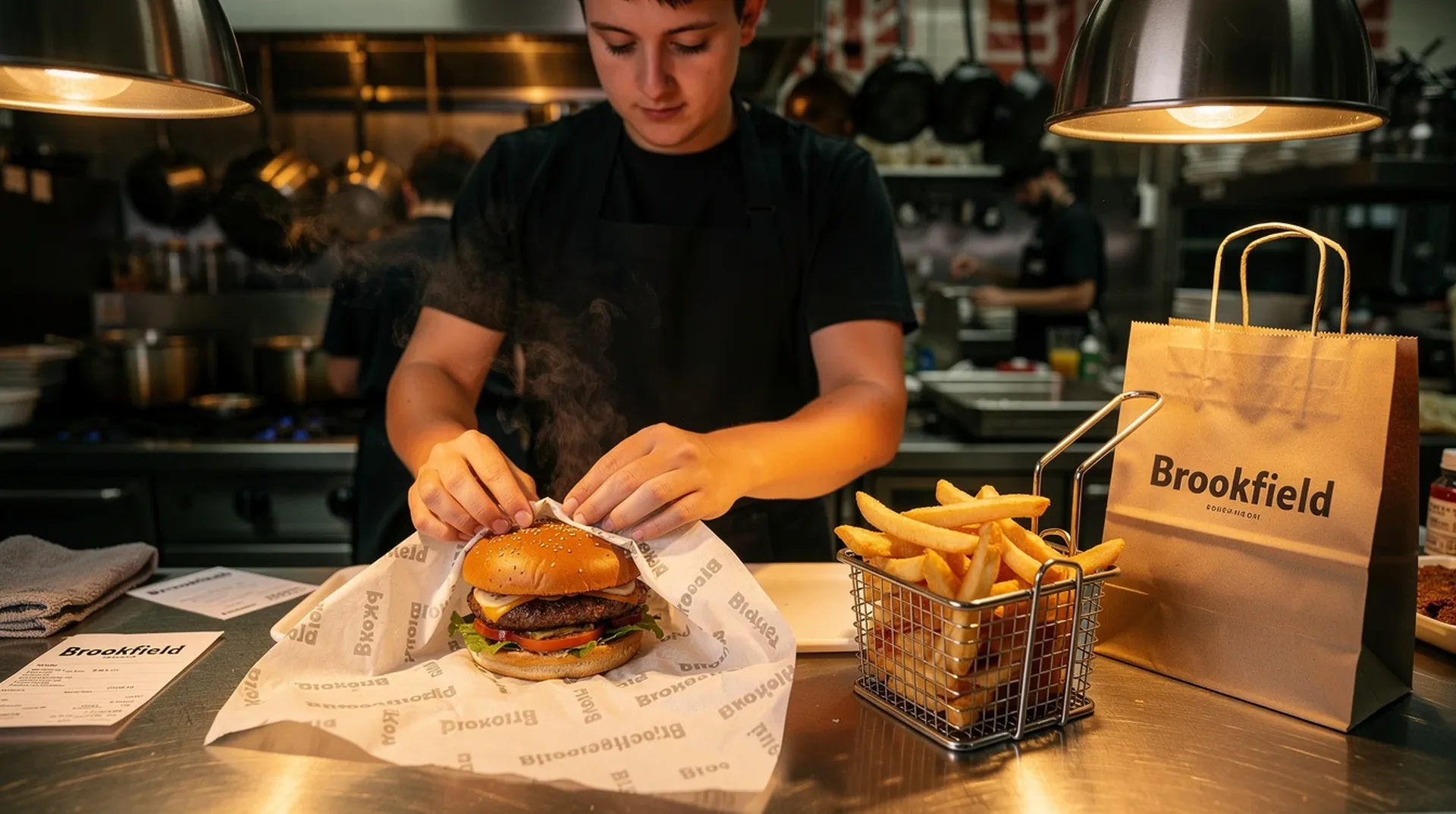
A customer orders a burger. Within seconds, the kitchen completes it. The product is wrapped, bagged, and handed over. The customer walks to their car, drives home, opens the package.
The burger should still be warm. The bun should be intact, not soggy from condensation. The wrapper shouldn't be grease-stained in a way that transfers to hands or car seats. And ideally, it should photograph well for Instagram.
That entire scenario-from grill to consumption-is shaped by paper packaging that costs a few pence per unit. Get it right, and the food delivers on its promise. Get it wrong, and product quality suffers regardless of how good the kitchen execution was.
Fast food packaging must balance competing demands: speed of use in high-pressure service environments, thermal performance that maintains food quality, barrier properties that manage grease and moisture, brand presentation that reinforces positioning, and increasingly, sustainability credentials that satisfy consumer expectations.
This guide examines the technical requirements for fast food paper packaging, the innovations addressing current challenges, and practical guidance for operators selecting and specifying packaging materials.
Understanding Fast Food Packaging Requirements
The Operational Context
Quick-service restaurants operate under constraints that other food businesses don't face:
Speed pressure:
Service times measured in seconds
Staff making split-second material choices
No time for complicated wrapping techniques
Packaging must be intuitive and forgiving
Volume throughput:
Hundreds or thousands of items daily
Consistent results required regardless of operator
Training time limited
Material waste directly impacts margins
Varied product mix:
Hot items, cold items, wet items, dry items
Different grease loads across menu
Single packaging system must handle range of products
Inventory complexity has operational cost
The Customer Experience Context
From the customer's perspective, packaging determines:
Food quality perception:
Temperature at consumption
Texture preservation (crispy vs. soggy)
Visual presentation when unwrapped
Freedom from mess and transfer
Brand perception:
Attention to detail signals
Environmental positioning
Differentiation from competitors
Photography/social media presentation
Core Paper Properties for Fast Food

Grease Resistance
Grease management is fundamental-nobody wants oil-soaked hands or car seats.
Grease resistance mechanisms:
| Treatment Type | How It Works | Performance Level | Best Application |
|---|---|---|---|
| Mechanical refining (greaseproof) | Dense fibre structure resists penetration | Moderate | Light-grease items, dry applications |
| Wax coating | Hydrophobic barrier on surface | Good | Moderate grease, short hold times |
| Fluorochemical treatment | Molecular oil/water repellency | Excellent | High-grease items, longer hold times |
| Bio-based barriers | Plant-derived oil resistance | Good-excellent | Sustainability-focused applications |
The grease resistance trade-off: Higher grease resistance typically means:
Reduced breathability (potential condensation issues)
Higher material cost
Potential recyclability complications (especially fluorochemicals)
Match grease barrier level to actual menu requirements-over-specifying wastes money and may create other problems.
Moisture Management
Moisture creates multiple challenges:
Condensation: Hot food in enclosed packaging creates steam. When that steam condenses on packaging or food surfaces, it creates sogginess-the enemy of crispy fried products.
Product moisture: Some foods release moisture naturally (tomatoes in sandwiches, juicy burgers). Packaging must absorb or wick this moisture without failing structurally.
External moisture: Wet weather, iced drinks, refrigerated items-external moisture exposure tests packaging integrity.
Paper solutions:
| Challenge | Paper Property | Example Products |
|---|---|---|
| Condensation | Breathability, absorption | Perforated papers, kraft wraps |
| Product moisture | Wet strength, absorption | Wet-strength papers, bonewrap |
| External moisture | Water resistance | Waxed papers, PE-coated papers |
Thermal Performance
Heat retention affects customer experience more than most operators recognise:
Temperature loss factors:
Wrap material thermal conductivity
Air gaps within packaging
External temperature exposure
Time from packaging to consumption
Paper packaging approaches:
Insulated structures: Multi-layer or textured papers that create air pockets and reduce heat transfer.
Breathable wraps: Allow steam escape to prevent condensation while managing heat loss acceptably.
Sealed systems: Foil-lined or PE-coated papers that minimise heat transfer but may trap steam.
The thermal-moisture trade-off: Higher insulation typically means more steam trapping. Finding the right balance depends on product characteristics and expected hold times.
Application-Specific Solutions

Burger Wrapping
Burgers present the combination challenge: high grease, high moisture, heat retention needed, and customer presentation matters.
Traditional approach: Waxed kraft paper
Good grease barrier
Moderate breathability
Clean unwrap experience
Cost-effective
Enhanced approach: Greaseproof with steam vents
Excellent grease barrier
Designed breathability reduces sogginess
May require more operator attention
Premium approach: Custom printed barrier papers
Full brand presentation
Tailored grease/moisture balance
Higher unit cost, higher brand impact
Sandwich and Wrap Packaging
Sandwiches vary widely in composition, requiring flexible packaging approaches:
Cold sandwiches:
Minimal thermal requirement
Grease management varies by filling
Moisture management for salad components
Clarity/window options for display appeal
Toasted/hot sandwiches:
Thermal retention important
Condensation management critical for bread texture
Higher grease exposure from melted cheese/heated meats
Wraps and burritos:
Structural support for soft products
Grease barrier for meat/sauce components
Ease of partial unwrapping for eating
Structural hold during consumption
Fried Products
Fried foods demand the most from grease-resistant packaging:
Chips/fries:
Very high grease load immediately after frying
Heat retention affects quality significantly
Salt adhesion can be affected by packaging choice
Structural support for portion containment
Fried chicken:
High grease, long-term exposure
Breading texture preservation critical
Structural support for heavier items
Presentation for premium positioning
Donuts and pastries:
Moderate grease from oil/butter content
Surface transfer marks visible on product
Delicate product protection
Display presentation important
“We tested six different chip bags before finding one that managed grease adequately without making the chips soggy from trapped steam. That single specification change improved our customer satisfaction scores by 11 points.”- Operations Director, Regional Fish & Chip Chain
The Sustainability Imperative

Consumer Expectations
Sustainability has moved from differentiator to baseline expectation in food service:
Younger demographics particularly sensitive to packaging sustainability
Social media scrutiny of "excessive" or "wasteful" packaging
Willingness to pay premium for sustainable packaging varies by market
Greenwashing creates brand risk when claims don't hold up
Material Considerations
Paper advantages:
Renewable resource base
Biodegradable in most forms
Recyclable (with caveats)
Compostable options available
Consumer perception generally positive
Paper challenges:
Coatings can affect recyclability
Contamination reduces recycling viability
Compostability claims require certification
Performance may not match plastic in all applications
Sustainable Specification Guide
| Sustainability Goal | Specification Approach | Trade-offs |
|---|---|---|
| Recyclability | Uncoated or water-based coated papers | Reduced barrier performance |
| Compostability | Certified compostable materials | Higher cost, certification requirements |
| Reduced material | Lighter weight papers, right-sizing | May affect performance |
| Recycled content | Recycled paper stock | Appearance and strength variations |
| Responsible sourcing | FSC/PEFC certified | Cost premium, supply chain verification |
The Recyclability Reality
Paper recyclability in fast food contexts is complicated:
Theoretically recyclable: Most paper packaging is technically recyclable.
Practically recyclable: Food-contaminated paper often isn't accepted by recycling facilities. Grease-soaked papers contaminate recycling streams.
Honest position: Many fast food papers will end up in general waste regardless of theoretical recyclability. Consider:
Designing for composting where infrastructure exists
Reducing material weight to minimise waste impact
Supporting waste infrastructure development
Communicating disposal guidance to customers
Operational Efficiency Considerations
Format Selection
Paper format affects operational efficiency significantly:
Sheets:
Versatile application
Easy inventory management
May require folding/wrapping technique
Best for: Varied products, lower volume operations
Pouches/bags:
Pre-formed structure
Minimal operator skill required
Limited flexibility for product variation
Best for: High-volume, consistent products
Roll stock:
Machine application
Highest throughput potential
Equipment investment required
Best for: Very high volume, automated lines
Dispensing and Storage
Dispenser systems:
Consistent sheet delivery
Reduced waste from damaged stock
Space efficiency at service stations
Hygiene management in kitchen environment
Storage requirements:
Protect from humidity (affects performance)
Prevent contamination (food safety)
FIFO rotation (print consistency, freshness)
Accessibility for restocking (operational efficiency)
Staff Training Minimisation
Simpler is better in fast food:
Packaging that forgives:
Tolerates imperfect wrapping technique
Performs adequately even with rushed handling
Doesn't require precise positioning
Reduced SKU count:
Fewer packaging types = less confusion
More versatile papers may cost more but simplify operations
Consider total cost including training and error rates
Custom Printing for Fast Food

Brand Differentiation
In a competitive market, packaging is brand media:
Print opportunities:
Logo and brand colours
Menu imagery and appetite appeal
Promotional messaging
Sustainability communication
Social media handles and hashtags
Print limitations:
Food contact regulations affect ink choices
Grease resistance coatings may affect print quality
High-volume economics require efficient production
Design Considerations
Visual impact:
Bold designs photograph well
Consistent with other brand touchpoints
Distinctive from competitors
Functional integration:
Print shouldn't interfere with packaging function
Ink coverage affects paper properties
Fold lines and wrap zones need consideration
Production efficiency:
Design complexity affects cost
Colour count impacts pricing
Registration requirements influence production speed
Specification Process for Fast Food Operations
Step 1: Menu Analysis
Document your packaging requirements by product category:
| Product Category | Items | Key Requirements | Volume (weekly) |
|---|---|---|---|
| Burgers | Classic, premium, plant-based | Grease barrier, thermal, presentation | 3,000 |
| Sandwiches | Hot, cold varieties | Varies by type | 2,000 |
| Fried sides | Chips, onion rings | High grease, steam management | 4,000 |
| Breakfast items | Wraps, muffins | Moderate grease | 1,500 |
Step 2: Performance Prioritisation
Rank requirements by importance for your brand:
Non-negotiable: Food safety, basic functionality
Critical: Customer experience factors (e.g., no grease transfer)
Important: Brand presentation, sustainability credentials
Desirable: Cost optimisation, operational convenience
Step 3: Supplier Engagement
Information to provide:
Menu and product descriptions
Volume requirements
Current packaging (for comparison/improvement)
Brand guidelines and sustainability requirements
Performance problems to solve
Questions to ask:
What food contact certifications apply?
What grease resistance options are available?
Are PFAS-free alternatives available?
What sustainability credentials are documented?
What print capabilities are offered?
What is lead time and minimum order quantity?
Step 4: Testing Protocol
Before committing to volume:
Kitchen testing:
Staff feedback on handling and speed
Performance under service pressure
Integration with existing equipment/process
Product testing:
Hold time performance (temperature, texture)
Grease containment over realistic duration
Customer-facing presentation
Customer feedback:
Limited release with feedback collection
Social media monitoring
Complaint tracking versus previous packaging
Innovation Trends
Current Developments
Plant-based barriers: Bio-derived alternatives to traditional grease-resistant treatments, addressing PFAS concerns while maintaining performance.
Active packaging: Papers with functional additives-antimicrobial treatments for shelf life, oxygen absorbers for freshness, temperature indicators.
Connected packaging: QR codes, NFC chips, or printed codes enabling digital experiences, traceability information, or promotional engagement.
Reduced material approaches: Engineering packaging for minimum material use while maintaining function-lighter weights, optimised sizing.
Future Directions
Compostable infrastructure alignment: Packaging designed for emerging commercial composting infrastructure, with clear disposal guidance.
Circular economy integration: Packaging systems designed for material recovery and recycling, moving beyond theoretical recyclability to practical loops.
Personalisation and localisation: Digital printing enabling smaller runs with localised or campaign-specific messaging cost-effectively.
Conclusion: Packaging as Operational Excellence
Fast food packaging operates at the intersection of food quality, brand presentation, operational efficiency, and sustainability. Getting it right requires understanding the technical properties that drive performance and matching them to your specific menu, operations, and brand requirements.
Key principles:
Match barrier properties to menu: Not all items need maximum grease resistance; over-specification wastes money and may compromise other properties
Prioritise operational simplicity: Packaging that requires less training and forgives imperfect handling performs better in real conditions
Address sustainability authentically: Specific, verifiable claims build trust; vague positioning creates risk
Test before committing: Real-world performance under service conditions matters more than data sheets
Consider total cost: Include handling efficiency, waste rates, and customer experience alongside unit price
Related Articles
Paper Packaging Solutions: Solving Real Business Challenges with Specialty Converted Paper - the pillar guide for this topic.
Fish and Butcher Shop Packaging: The Complete Guide to Specialty Wrapping Papers - Specialty wrapping papers for wet protein - wet-strength, bonewrap, greaseproof, waxed kraft.
Luxury Cosmetics Packaging: Mould-Inhibited Paper for Brand Protection - How mould-inhibited paper protects cosmetics from damage, reduces returns, and protects brand reputation.
Industrial Anti-Corrosion VCI Papers: Complete Metal Protection Guide - VCI (vapour corrosion inhibitor) papers for metal protection - specification, ROI, and a clean alternative to oils.