
Is parchment paper the same as butter paper?
It depends on where you are and which parchment you mean.
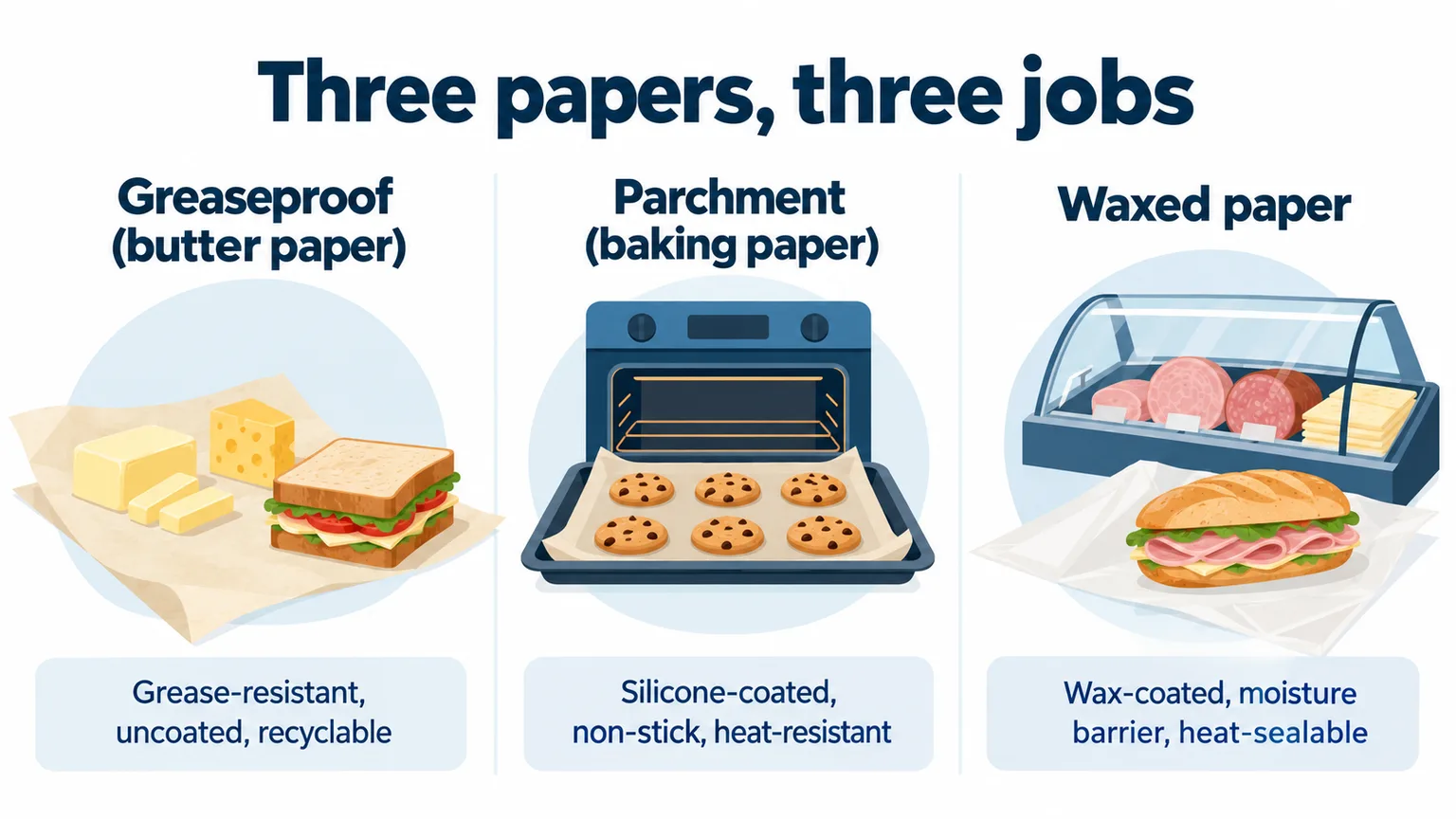
Baking parchment, sold in UK shops as baking paper, is paper with a silicone coating. It is made for the oven: non-stick and heat-resistant.
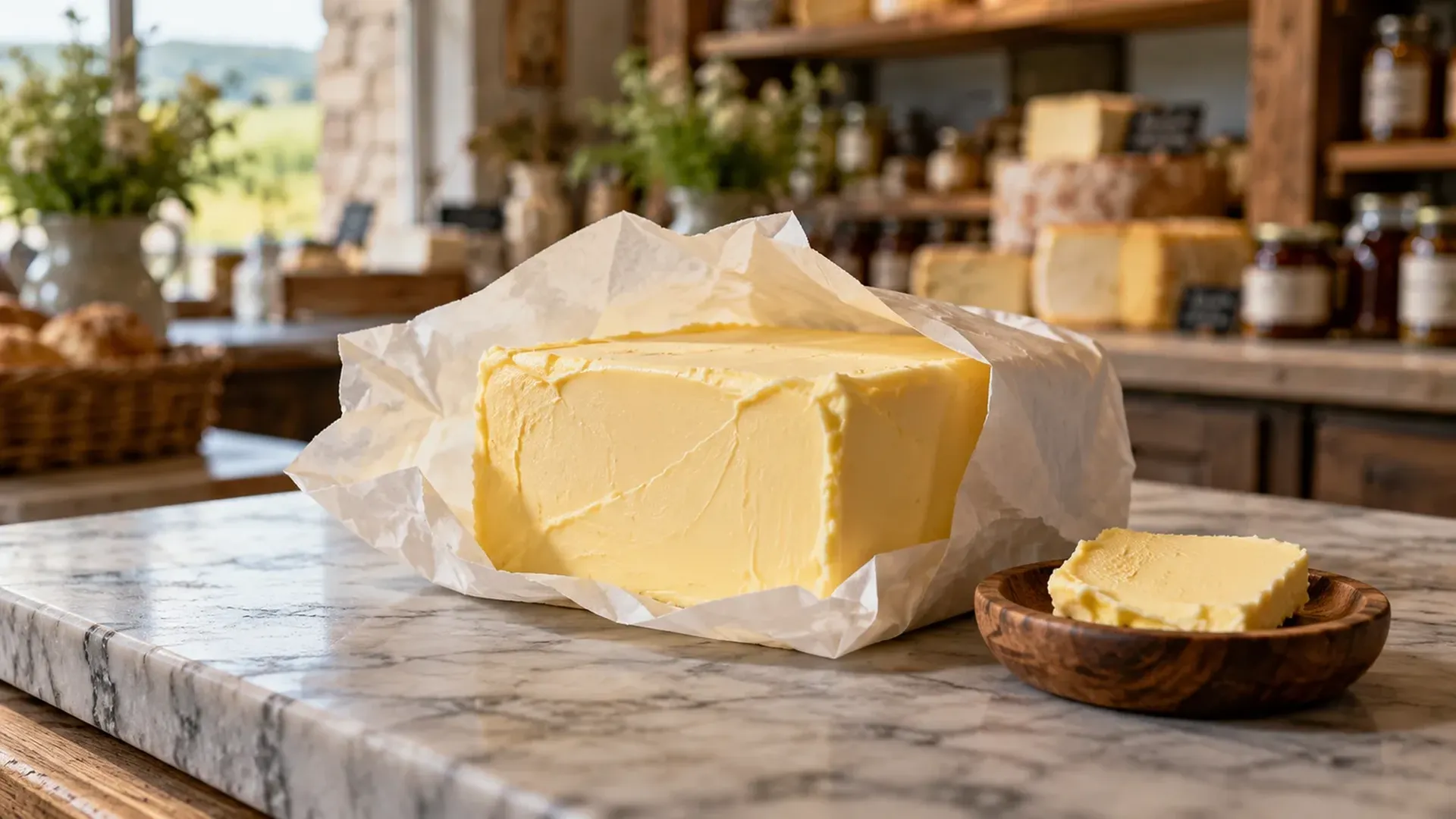
Butter paper, in the UK, is the paper a block of butter comes wrapped in. It is designed to keep fat in and moisture, light and smells out, not to go in the oven.
Butter paper, in India and parts of Asia, is the household name for baking or greaseproof paper used to line cake tins. In that usage, butter paper and parchment paper are close to the same thing.
So when a recipe from India says "line the tin with butter paper", a UK baker should reach for baking paper. When a UK dairy asks for butter paper, they want a wrap.
What is parchment?
"Parchment" covers two papers that share a name.
Silicone baking parchment is a dense paper coated with silicone. This is what most people mean today.
Vegetable parchment is paper passed through a bath of sulphuric acid, which fuses the surface fibres into a tough, smooth, grease-resistant layer that keeps its strength when wet. It has long been used to wrap butter, which is one reason the two terms get mixed up.
Neither is made from animal skin; the name comes from the look of traditional parchment. Our guide to what greaseproof paper is explains how these papers differ from plain greaseproof.
Parchment paper vs butter paper: the difference
| Baking parchment | Butter paper (UK butter wrap) | |
|---|---|---|
| Made for | Baking | Wrapping butter, margarine and other fats |
| Surface | Silicone coating | Wax coating, parchment, or a foil-paper laminate |
| Oven use | Yes | No, unless the wrap is a plain parchment or greaseproof sheet |
| Barrier | Grease resistance and non-stick | Fat and moisture barrier; foil adds a stronger barrier |
| Printed | Rarely | Usually, with the brand and pack information |
| Format | Rolls and sheets for kitchens | Sheets cut to the block, or reels for wrapping machines |
What is butter paper used for?
In the UK trade, butter paper is used to wrap:
butter and margarine blocks, from 250 g retail packs to 1 kg catering blocks,
artisan and farm butter sold through farm shops, delis and markets,
portion butter and compound butters for hospitality,
lard, dripping and other cooking fats,
some cheeses and other fatty foods, where a fat-resistant wrap is needed (see cheese wrap).
In home kitchens there is a British habit worth knowing: keep the butter wrapper and use it to grease a cake tin.
What should you wrap butter in?
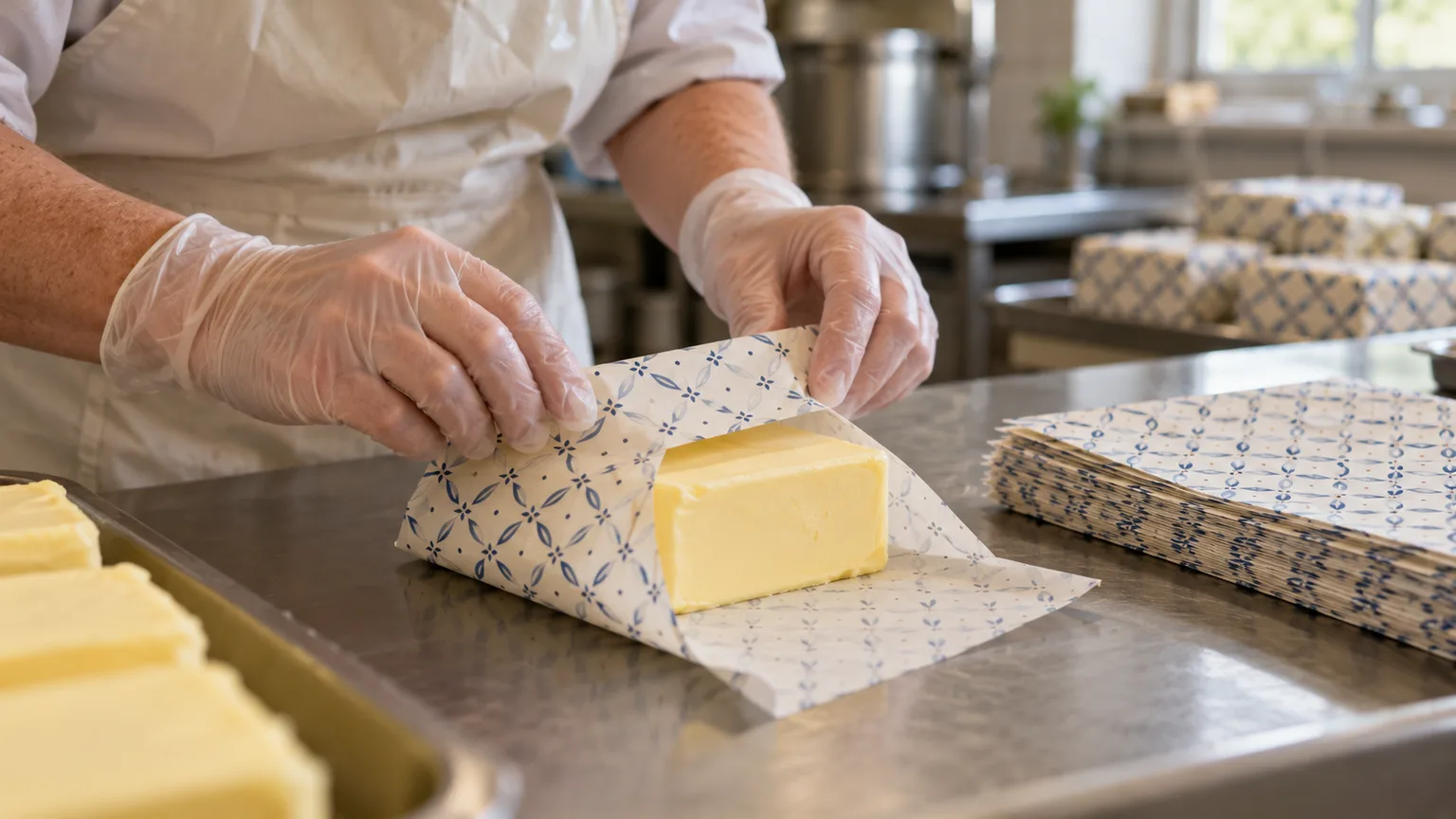
For a business, the choice comes down to barrier, shelf life and presentation.
| Wrap | Good for | Trade-off |
|---|---|---|
| Waxed paper | Artisan and farm butter, short supply chains, a traditional look | Not for the oven; harder to recycle than plain paper |
| Foil-paper laminate | Supermarket and long-shelf-life blocks needing a stronger barrier | Harder to recycle; usually a higher packaging EPR cost |
| Greaseproof paper | Portions, compound butters and short holds in hospitality | Less moisture barrier than waxed paper |
Butter picks up smells easily and goes rancid faster in light, so the further and longer a block travels, the more barrier it needs. A farm shop selling within the week has different needs from a dairy supplying national retail.
Practical points to settle before you ask for a quote:
Block size. Sheets are cut to the block; common sizes are 250 g, 500 g and 1 kg, and bespoke sizes are possible.
Hand wrap or machine. Pre-cut sheets for hand wrapping; reels slit to width for inline wrapping machines.
Print. Up to 6-colour flexographic print with water-based, food-safe inks for the brand and pack information. See printing.
Wax. Plant-based wax specifications are available for dairies with sustainability commitments.
End of life. Plain papers are simpler to recycle or compost than foil laminates. See is greaseproof paper recyclable?
Can butter paper be used in the oven?
It depends which butter paper you have. UK butter wrap is usually waxed or foil-laminated, and neither belongs in an oven: wax melts and smokes, and foil laminates are not designed for heat. If "butter paper" means baking paper, as it does in India, then yes: silicone baking paper is made for ovens, including an oven toaster grill (OTG). Plain greaseproof can line a tin if it is greased. Our guide to greaseproof vs parchment paper covers oven use.
Can I use butter instead of parchment paper?
For many bakes, yes. Greasing a tin with butter, and often dusting it with flour, stops most cakes sticking. Greased greaseproof paper does the same job as a liner. Silicone baking paper is still the easier choice for sticky, sugary bakes such as meringues, where butter alone may not release cleanly.
Working with GMLUK
GMLUK converts and prints butter wrap at our factory in Grantham, Lincolnshire: food-grade waxed paper and parchment in 50 to 60 gsm, pre-cut to your block or slit to reels, with optional foil lamination and up to 6-colour flexographic print. We buy the base papers from mills and supply finished wrap compliant with Regulation (EC) 1935/2004 as retained in UK law. Minimum orders depend on grade and print; most plain and printed greaseproof starts at 10,000 sheets or the reel equivalent. Ask for a quote below that. Lead time is from 3 weeks. We can also hold your finished stock in Grantham free of charge and deliver it as you need it (warehousing).
See butter wrap, greaseproof paper or waxed paper, request free samples, or get a quote.
Frequently asked questions
Is parchment paper the same as butter paper?
Not in the UK. Baking parchment is silicone-coated paper made for the oven. UK butter paper is the wrap used for blocks of butter: waxed paper, parchment or a foil-paper laminate that keeps fat and moisture in. In India, "butter paper" is the everyday name for baking or greaseproof paper, so there the two are close to the same thing.
What is the difference between parchment and butter paper?
Baking parchment has a silicone coating, so it is non-stick and oven-safe. UK butter paper is built to wrap fat: it carries a wax coating, is a parchment, or is laminated to foil, and it is usually printed with the brand. Butter wrap is not designed for oven use unless it is a plain parchment or greaseproof sheet.
What is butter paper used for?
In the UK trade, butter paper wraps butter and margarine blocks, artisan and farm butter, portion and compound butters, lard and other cooking fats. It keeps fat from soaking through and moisture and smells out. In India and some other countries, the name is also used for baking paper that lines cake tins.
Can butter paper be used in OTG?
If butter paper means baking paper, as it usually does where OTG ovens are common, then yes: silicone baking paper is made for oven heat. UK butter wrap is different. It is usually waxed or foil-laminated, and neither should go in an oven or oven toaster grill, because wax melts and smokes and foil laminates are not designed for heat.
Is butter paper reusable?
Butter wrap is single-use in a food business, for hygiene and labelling reasons. At home, many people reuse a butter wrapper once to grease a cake tin. Silicone baking paper can sometimes be reused for a second bake if it is clean and undamaged, but greaseproof and waxed papers are not designed for reuse.
What is the price of 1 kg of butter paper?
Trade butter wrap is not usually sold by the kilo. It is quoted per job, based on the paper, sheet size or reel width, print colours, any foil lamination and the quantity. Send us the block size and quantity and we will quote; samples are free.
Is parchment paper compostable?
Silicone-coated baking parchment is not normally certified compostable, and most UK councils ask for it to go in general waste. Plain greaseproof paper is uncoated plant fibre and breaks down in compost. Waxed and foil-laminated butter wraps are harder to recycle or compost than plain paper.