
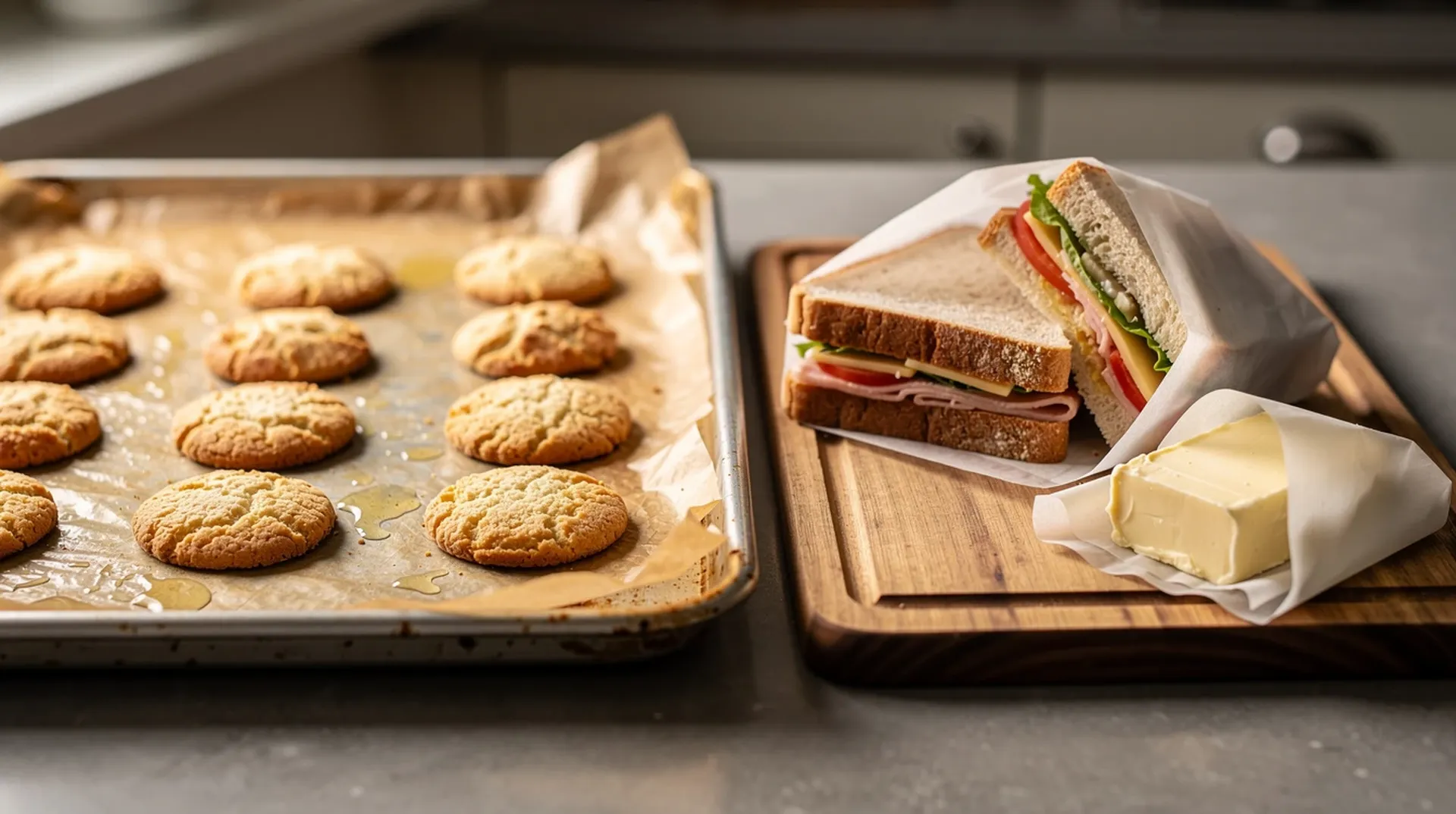
Is greaseproof paper the same as parchment paper?

No, although they look alike and are often sold side by side. The difference is what stops the grease.
Greaseproof paper has no coating. The mill beats the pulp fibres until they swell and bond into a tight, low-porosity sheet, so oil and fat cannot travel through it. There is no wax, silicone or plastic on the surface. Our guide to what greaseproof paper is and how it is made covers this in detail.
Parchment paper is paper coated with silicone, usually on both sides. The silicone gives a non-stick surface and holds up to oven heat, which is why it is the standard paper for baking.
Both resist grease. Only parchment is genuinely non-stick.
Is baking paper the same as greaseproof paper?
No. In UK shops, "baking paper" and "baking parchment" both mean the silicone-coated paper. "Greaseproof paper" means the uncoated grade. If a recipe or a supplier uses the words loosely, check whether the paper is silicone coated: that one detail decides whether it will release a sticky bake.
Greaseproof vs parchment vs baking paper: the comparison
| Property | Greaseproof paper | Parchment or baking paper |
|---|---|---|
| Coating | None | Silicone, usually both sides |
| How it resists grease | Dense fibre structure | Silicone barrier |
| Non-stick | No, grease the paper for baking | Yes |
| Oven use | Lining tins at normal baking temperatures, when greased | Designed for oven use; see the temperature note below |
| End of life | Plain paper fibre; council collection varies | Silicone-coated; usually general waste |
| Usual UK label | Greaseproof paper | Baking paper, baking parchment |
| Typical trade use | Wrapping, interleaving, tray liners, printed branded wrap | Baking sheets, tin liners, sticky or sugary bakes |
| Relative cost | Lower | Higher |
Can you use greaseproof paper in an oven?

Yes, for lining a tin at normal baking temperatures, but it is not non-stick. That is why traditional British recipes say "grease and line": the fat stops the cake or biscuit bonding to the paper. Without it, sugary or sticky bakes can tear when you lift them off, and at high heat uncoated paper browns and turns brittle.
Silicone baking paper is made for the oven. As typical figures, greaseproof paper is oven-safe to around 220°C and silicone parchment to around 230°C, but the rated temperature differs by grade, so check the data sheet for the exact paper you are buying. For any production line, ask your supplier for that rating rather than relying on the label.
Can I use parchment paper instead of grease?
Usually, yes. A silicone baking paper releases most bakes without greasing the tin, which is the main reason commercial bakeries use it for sheet trays. Greaseproof paper does not do this on its own, so if you swap baking paper for greaseproof, grease it.
What is greaseproof paper called in the US?
There is no single US retail equivalent. American recipes say "parchment paper" for silicone baking paper, and US food-service buyers tend to talk about grease-resistant or deli paper for wraps. US and Australian terminology often differs: in the US, "wax paper" and "parchment paper" are often used interchangeably even though they're different products. If you are working from overseas recipes or an imported specification, check the coating, not the name on the box.
Waxed paper is a third product again: paper coated with wax for a moisture barrier, used for wrapping and cold or frozen interleaving, never in the oven. See our waxed paper range.
Which paper should a food business use for which job?
| Job | Paper | Why | Product |
|---|---|---|---|
| Wrapping burgers, sandwiches and deli items | Greaseproof | Holds hot, oily food without bleed-through; prints well | [Burger wrap](/products/burger-wrap-greaseproof/), [sandwich wrap](/products/sandwich-wrap-greaseproof/) |
| Branded counter wrap | Printed greaseproof | Up to 6-colour flexo on a plain paper base | [Printed greaseproof paper](/products/printed-greaseproof-paper/) |
| Tray and basket liners | Greaseproof | Keeps grease off the basket, cheaper than coated paper | [Tray liners](/products/tray-liner-greaseproof/) |
| Interleaving sliced meat, cheese or patties | Greaseproof, or silicone-coated interleaving for clean separation | Stops layers sticking | [Interleaving paper](/products/interleaving-paper/) |
| Wet, chilled or frozen products | Waxed paper | Moisture barrier | [Waxed paper](/products/waxed-paper/) |
| Butter and other fats | Butter wrap | Fat and moisture barrier, sized to the block | [Butter wrap](/products/butter-wrap/) |
More questions about greaseproof and parchment
We have split the questions this page used to answer into their own guides:
Is greaseproof paper recyclable? Recycling, composting, plastic content, and what to record for packaging EPR.
What is greaseproof paper? What it is made from, how mills make it, grades, GSM and uses.
PFAS in food paper Why some grease-resistant papers used PFAS, the 2026 rules and what to ask a supplier.
Is parchment paper the same as butter paper? What butter paper means in the UK and what to wrap butter in.
What is butcher paper? The UK meaning and how it differs from both.
Working with GMLUK
GMLUK buys greaseproof, waxed and silicone-coated base papers from mills and converts and prints them at our factory in Grantham, Lincolnshire: sheeting, slitting reels from 50 mm to 1,000 mm, die-cutting and up to 6-colour flexographic printing with water-based, food-safe inks. Minimum orders depend on grade and print; most plain and printed greaseproof starts at 10,000 sheets or the reel equivalent, and lead time is from 3 weeks. Ask for a quote below that minimum, and we can look at combining it with another order or a short run.
Browse greaseproof paper, request free samples or get a quote.
Frequently asked questions
Is greaseproof paper the same as parchment paper?
No. Greaseproof paper is uncoated and resists fat because its fibres are beaten into a dense, low-porosity sheet. Parchment paper is coated with silicone, which makes it non-stick and suitable for hot baking. Both resist grease, but only parchment releases sticky bakes cleanly. For wrapping, tray lining and interleaving food, greaseproof does the job at lower cost.
Is baking parchment the same as greaseproof paper?
No. In the UK, baking parchment and baking paper are names for silicone-coated paper. Greaseproof paper has no coating. Baking parchment is the better choice for sticky or sugary bakes at high temperature; greaseproof is the usual choice for wrapping and lining where non-stick is not needed, and it should be greased if you bake on it.
Can you use greaseproof paper in an oven?
Yes, to line tins at normal baking temperatures, but it is not non-stick, so grease it first. Without fat, sugary or sticky bakes can stick to the paper and tear. At high heat uncoated paper browns and turns brittle. For high-temperature baking or sticky products, use a silicone-coated baking paper rated for the oven temperature you need.
Why can't you use greaseproof paper in the oven?
You can, with care. The problem is sticking, not safety: greaseproof paper has no silicone coating, so bakes bond to it unless the paper is greased. It also browns at high temperatures. That is why baking paper, which is silicone coated, is the standard for oven trays and sticky bakes, and greaseproof is kept for wrapping and lining.
Can I use parchment paper instead of grease?
Usually, yes. A silicone baking paper releases most bakes without greasing the tin, which is why commercial bakeries line sheet trays with it. Greaseproof paper does not have that coating, so if you use greaseproof instead of baking paper, grease it to stop the bake sticking.
What is greaseproof paper called in the US?
There is no single US retail name for it. American recipes use "parchment paper" for silicone baking paper, and US food-service buyers usually talk about grease-resistant or deli paper for wraps. Waxed paper is a different product again. When buying from an overseas supplier or following a US recipe, check whether the paper is silicone coated rather than relying on the name.
Is parchment paper compostable?
Silicone-coated parchment is harder to compost or recycle than uncoated paper, and most UK councils ask for it to go in general waste. Uncoated greaseproof paper is plain plant fibre. Our guide to whether greaseproof paper is recyclable covers composting, recycling and what a food business should record for packaging EPR.