
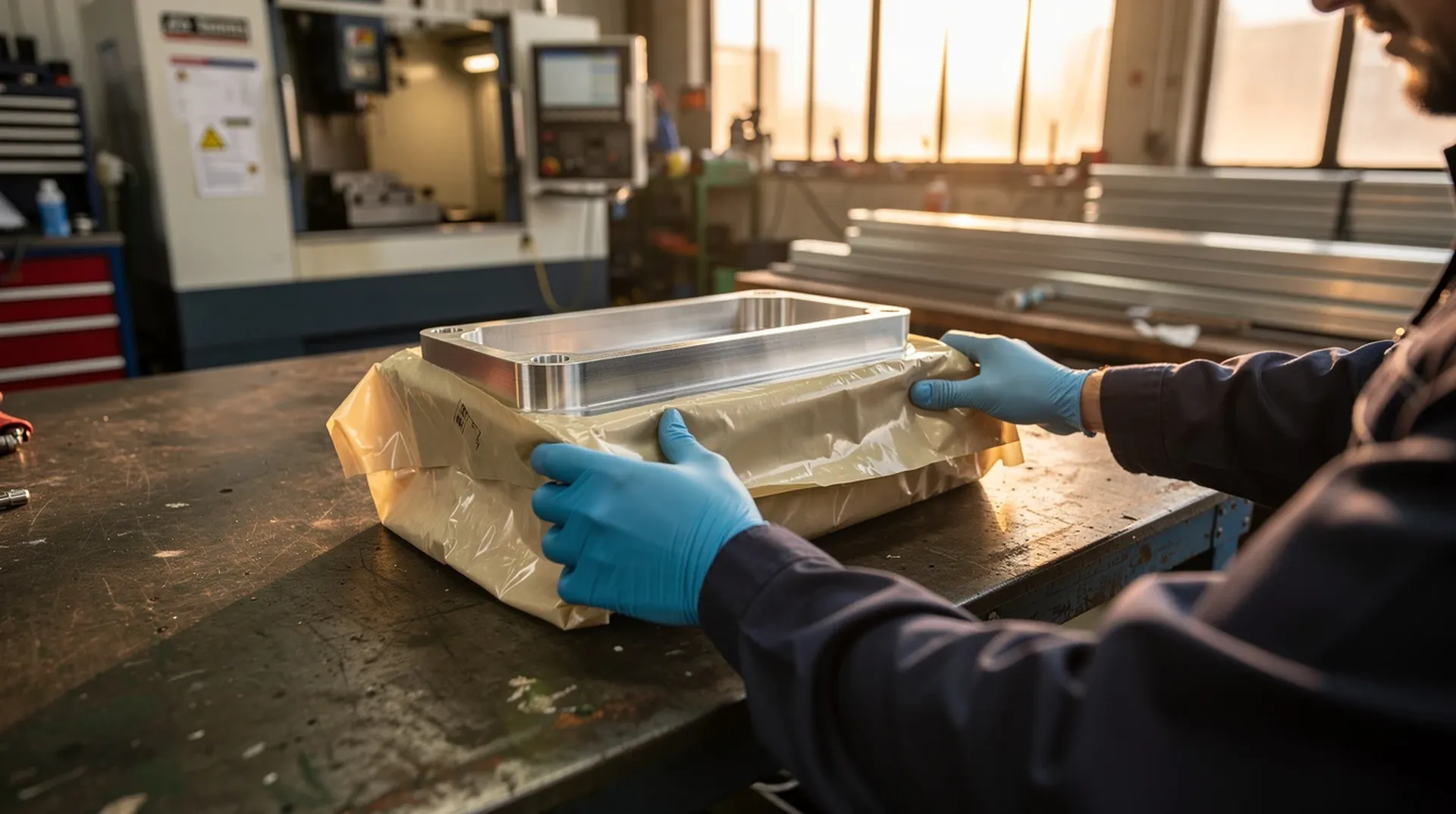
Industrial Anti-Corrosion VCI Papers: The Complete Guide to Metal Protection Packaging
Introduction: The True Cost of Corrosion
A precision engineering firm in the Midlands ships £180,000 worth of machined steel components to a German customer. Eight weeks later, the shipment arrives. Surface rust has formed on 40% of the parts. The customer rejects the entire delivery, demanding rework before acceptance.
Direct costs: approximately £12,000 in cleaning, re-inspection, and expedited re-shipping. Indirect costs: damaged customer relationship, emergency production rescheduling, and a reputation hit that takes months to repair.
This scenario-or variations of it-plays out daily across manufacturing sectors. Corrosion doesn't care about your production quality, your ISO certifications, or your delivery deadlines. It responds to physics: metal surfaces, oxygen, and moisture combine to create rust.
VCI (Vapour Corrosion Inhibitor) papers interrupt this reaction. By releasing molecular inhibitors that form a protective layer on metal surfaces, VCI papers prevent corrosion without oils, greases, or coatings that require removal before use.
This guide examines how VCI technology works, when it's appropriate, specification considerations, and the business case for switching from traditional rust-preventive methods.
Understanding Corrosion: The Enemy You're Fighting

The Corrosion Process
Corrosion occurs when three elements combine:
Metal surface (the anode)
Oxygen (from air)
Moisture (humidity, condensation, or liquid water)
This electrochemical reaction converts metal into metal oxide (rust for ferrous metals, tarnish for others). The reaction accelerates with:
Higher humidity
Temperature fluctuations causing condensation
Presence of salts or acids (fingerprints contain both)
Surface contamination
Industrial Corrosion Scenarios
| Scenario | Risk Factors | Typical Damage |
|---|---|---|
| Warehouse storage | Humidity variation, temperature cycling | Surface rust, pitting |
| Sea freight | Salt air, container condensation ("container rain") | Severe corrosion, deep pitting |
| Inter-process storage | Machining fluid residue, handling marks | Localised corrosion, contamination |
| Export shipments | Extended duration, climate variation | Variable severity depending on route |
| Customer inventory | Unknown storage conditions | Corrosion appearing after delivery |
The Cost Multiplier Effect
Corrosion costs multiply through the value chain:
Component cost: £15 Corrosion cleaning: £8 Re-inspection: £5 Rework if cleaning fails: £25 Expedited shipping: £12 Customer relationship cost: £? (difficult to quantify but real)
A 5% corrosion rate on a 10,000-unit shipment creates costs 3-4× the component value for affected parts.
How VCI Papers Work
The VCI Mechanism
VCI (Vapour Corrosion Inhibitor) papers work through a multi-phase protection mechanism:
1. Paper as carrier: Base paper is impregnated or coated with VCI compounds-chemical formulations that sublimate (transition from solid to gas) at room temperature.
2. Vapour release: VCI molecules continuously release from the paper into the surrounding air space. This creates a protective atmosphere within the package.
3. Surface adsorption: VCI molecules adsorb onto metal surfaces, forming a molecular layer just a few molecules thick-invisible but effective.
4. Corrosion interruption: The VCI layer interrupts the electrochemical corrosion reaction by creating a barrier between the metal surface and oxygen/moisture.
5. Self-renewal: As VCI molecules are depleted from surfaces, fresh molecules from the paper atmosphere replenish them, maintaining protection.
Key Performance Characteristics
Saturation time: VCI atmosphere reaches protective concentration in 1-4 hours for enclosed packages. Larger volumes or open configurations take longer.
Protection duration: Properly enclosed VCI packaging provides protection for 12-24+ months depending on enclosure quality and environmental severity.
Coverage reach: VCI vapours penetrate crevices, recesses, and interior surfaces that contact methods cannot reach.
Clean protection: No residue requiring removal-parts can be used directly from packaging.
VCI Paper Types: Matching Chemistry to Metal

Different metals require different VCI formulations. Using the wrong type provides inadequate protection-or potentially accelerates corrosion on certain metals.
Ferrous Metal Protection (Iron and Steel)
For steel, cast iron, and iron alloys:
Targeted ferrous formulations optimised for iron/steel chemistry
Maximum cost-effectiveness when only ferrous metals are present
Typically using amine-based or nitrite-based inhibitor systems
Applications: Steel components, cast iron parts, carbon steel fasteners, tool steel products
Multi-Metal Protection
For mixed-metal assemblies or non-ferrous metals:
Broad-spectrum formulations protecting multiple metal types
Essential when aluminium, copper, brass, or zinc are present
May use combined inhibitor systems or sequestered approaches
Applications: Assemblies with mixed metals, brass fittings, aluminium components, electrical parts with copper
Diamond Anti-Corrosion Papers
The Diamond Anti-Corrosion Paper range offers both ferrous-specific and multi-metal formulations:
Diamond Ferrous Range:
Optimised for steel and iron protection
Higher inhibitor loading for severe conditions
Cost-effective for steel-only operations
Diamond Multi-Metal Range:
Broad-spectrum protection across metal types
Safe for assemblies with mixed materials
Appropriate for general manufacturing environments
Specification Considerations
Paper Weight and Format
Base paper weight affects mechanical protection and VCI loading:
| Weight Class | Typical Use | Mechanical Protection | VCI Capacity |
|---|---|---|---|
| 35-50gsm | Interleaving | Minimal | Standard |
| 60-80gsm | Wrapping, lining | Moderate | Enhanced |
| 90-120gsm | Heavy parts, sharp edges | Good | High |
| Creped papers | Cushioning, energy absorption | Impact protection | Standard-enhanced |
Format options:
Sheets: For wrapping, interleaving, drawer/bin lining
Rolls: For continuous wrapping operations, machine application
Bags/pouches: For individual part packaging
Die-cut shapes: Custom formats for specific component configurations
Environmental Severity
Match VCI specification to your environmental exposure:
Mild conditions (climate-controlled storage, <60% RH):
Standard VCI loading
Basic paper weight acceptable
Protection verified for 12+ months
Moderate conditions (uncontrolled warehouse, seasonal variation):
Enhanced VCI loading recommended
Consider secondary barriers
Protection verified for 12-18 months
Severe conditions (sea freight, tropical storage, high contamination):
Maximum VCI loading
Multi-barrier approach
Consider supplementary desiccants
Protection verified for specific duration requirements
Enclosure Quality
VCI effectiveness depends critically on enclosure:
Excellent enclosure (heat-sealed bags, tight-wrapped):
VCI concentration builds quickly
Protection lasts to specification
Best for long-term or severe conditions
Good enclosure (folded/taped, nested parts):
VCI concentration adequate for most purposes
Some vapour loss acceptable
Suitable for moderate conditions and durations
Poor enclosure (loosely covered, open containers):
VCI concentration may be inadequate
Continuous vapour loss depletes paper
May require supplementary protection or improved enclosure
VCI Paper vs. Traditional Methods
Comparison with Oil-Based Protection
Traditional rust-preventive oils:
Advantages:
Well-understood technology
Very effective when properly applied
No enclosure requirements
Disadvantages:
Requires cleaning before use (typically solvent-based)
Creates environmental/disposal issues
Labour-intensive application
Contamination risk to other components
Slip/handling hazards
VCI papers:
Advantages:
No cleaning required-parts ready to use
Clean handling environment
Lower labour cost per part
Environmentally preferable profile
Protects interior/hidden surfaces
Disadvantages:
Requires adequate enclosure
Higher unit cost than bulk oil
Less effective for exterior storage
Specific formulations needed for different metals
Cost Comparison Framework
| Cost Element | Oil-Based | VCI Paper |
|---|---|---|
| Material cost per m² | £0.50-1.50 | £0.30-0.80 |
| Application labour | £2-5 per part | £0.30-0.80 per part |
| Cleaning labour | £3-8 per part | None |
| Cleaning chemicals | £0.50-2 per part | None |
| Waste disposal | £0.20-0.50 per part | Minimal (recyclable paper) |
| **Total cost per part** | **£6.20-17.50** | **£0.60-1.60** |
Costs are indicative and vary with part size, complexity, and volume
“We calculated our true cost of oil-based rust prevention at £9.40 per part including cleaning. VCI papers cost us £0.85 per part. Across 45,000 parts annually, that's over £380,000 in savings-and our production floor is cleaner.”- Manufacturing Director, Precision Components Manufacturer
Application Methods

Wrapping
Direct wrapping suits individual parts or small batches:
Place part on VCI paper sheet (sized appropriately)
Fold paper around part, ensuring surface contact or close proximity
Secure with tape (VCI-compatible) or bands
For enhanced protection, wrap in two layers
Best for: Individual components, varied part sizes, short-run production
Interleaving
Sheets between stacked or nested parts:
Place VCI paper between layers of stacked components
Ensure paper extends to container edges
Top with additional VCI sheet
Close container
Best for: Stacked flat parts, sheet metal, stampings, machined flats
Bagging
Pre-formed VCI bags for individual or grouped parts:
Place parts in appropriately sized VCI bag
Expel excess air if possible
Seal (heat seal, zip-lock, or fold-and-tape)
Best for: High-volume operations, consistent part sizes, maximum protection
Lining
Container, drawer, or bin lining for bulk parts:
Line container bottom with VCI paper
Add parts (single layer or loose-fill depending on sensitivity)
Cover top with VCI paper
Close container
Best for: Small parts in bulk, fasteners, standard components in storage
Implementation Guide
Assessment Phase
Inventory current costs:
Corrosion-related returns and rework
Current rust-preventive material costs
Application and cleaning labour
Disposal costs
Customer complaints with corrosion root cause
Map protection requirements:
Metal types requiring protection
Storage durations and conditions
Transit exposure (domestic, export, sea freight)
Handling and enclosure constraints
Pilot Program
Before full implementation:
Select test applications: Choose a representative sample including your highest-risk scenarios
Obtain samples: Request VCI papers in appropriate specifications
Conduct controlled testing:
Package identical parts with VCI paper and current method
Store under realistic conditions (or accelerated if timeline requires)
Inspect at intervals (30, 60, 90 days)
Document results: Photograph, measure, and record corrosion observations
Evaluate operational factors: Handling ease, production integration, staff feedback
Rollout Considerations
Training requirements:
Proper handling to avoid paper damage before use
Correct application techniques for each method
Enclosure quality importance
Storage of VCI paper stock (keep sealed until use)
Process integration:
Where does VCI application fit in your workflow?
Who is responsible for correct application?
How is enclosure quality verified?
What inspection confirms protection is maintained?
Inventory management:
VCI papers have shelf life (typically 24 months sealed)
FIFO stock rotation essential
Storage conditions: dry, away from extreme temperatures
Order quantities balancing MOQ against shelf life
Case Study: Export Manufacturer

Background: Midlands-based manufacturer of precision steel components for European automotive suppliers. 60% of production exported via road freight; 15% to overseas markets via sea freight.
Problem:
3.8% corrosion-related rejection rate
Severe rejections from sea freight shipments (8-12%)
Customer complaints damaging key account relationships
Oil-based protection creating cleaning burden at customers
Analysis:
Oil application was inconsistent (operator-dependent)
Sea freight containers experiencing severe humidity cycling
Cleaning requirements at customers creating friction
True corrosion cost: approximately £145,000 annually
Solution:
Diamond Anti-Corrosion Papers (ferrous formulation)
70gsm paper for wrapping major components
VCI bags for smaller parts
Enhanced packaging protocol for sea freight (double-wrap, desiccant supplement)
Implementation:
Three-month pilot on highest-risk product line
Staff training across production and despatch
Updated packaging specifications in quality system
Customer communication about "clean parts" benefit
Results (12 months):
Corrosion rejection rate: 0.4% (89% reduction)
Sea freight rejections: 1.1% (86% reduction)
Customer complaints: Near-zero
Net annual saving: £95,000 after VCI paper costs
Secondary benefit: One customer awarded additional business citing "superior delivered quality"
Common Questions
How long does VCI protection last?
In properly enclosed packaging with appropriate VCI loading, protection typically extends 12-24 months. Duration depends on enclosure quality, environmental severity, and initial VCI concentration.
Can VCI papers be used with oil-protected parts?
Generally yes, but油residue on parts may reduce VCI adsorption effectiveness. Best practice is to apply VCI protection to clean, dry parts. If transitioning from oil, ensure thorough cleaning before switching.
Do VCI papers work in very humid conditions?
VCI technology works in high humidity, but extreme conditions may require enhanced specifications-higher VCI loading, supplementary desiccants, and excellent enclosure quality.
Are VCI papers recyclable?
VCI paper itself is typically paper-based and potentially recyclable, though VCI treatments may affect recyclability in some waste streams. Check with your waste management provider for specific guidance.
Can parts be stored long-term in VCI packaging?
Yes, VCI packaging is specifically designed for extended storage. Verify protection duration claims match your requirements, and consider inspection protocols for very long storage periods.
What about contact with non-metals?
Most VCI formulations are safe for contact with plastics, rubber, and other common materials. However, verify compatibility for specific elastomers or sensitive materials-some VCI chemistries may affect certain plastics.
Conclusion: Protection That Makes Business Sense
VCI paper technology offers a straightforward value proposition: prevent corrosion damage at a fraction of the cost of dealing with corrosion after it occurs. For manufacturers shipping or storing metal components, the question isn't whether VCI protection makes sense-it's ensuring correct specification and implementation.
Key principles:
Match chemistry to metals: Ferrous-only vs. multi-metal formulations serve different needs
Enclosure matters: VCI papers require reasonable atmospheric containment
Calculate true costs: Include all cleaning, rework, and relationship costs in comparison
Test before committing: Pilot programs validate performance for your specific conditions
Train for consistency: Protection quality depends on proper application
Related Articles
Paper Packaging Solutions: Solving Real Business Challenges with Specialty Converted Paper - the pillar guide for this topic.
Fish and Butcher Shop Packaging: The Complete Guide to Specialty Wrapping Papers - Specialty wrapping papers for wet protein - wet-strength, bonewrap, greaseproof, waxed kraft.
Luxury Cosmetics Packaging: Mould-Inhibited Paper for Brand Protection - How mould-inhibited paper protects cosmetics from damage, reduces returns, and protects brand reputation.
Retail Brand Building with Custom Tissue Paper - Custom printed tissue for retail and e-commerce - specification, Pantone matching, design, and unboxing ROI.