
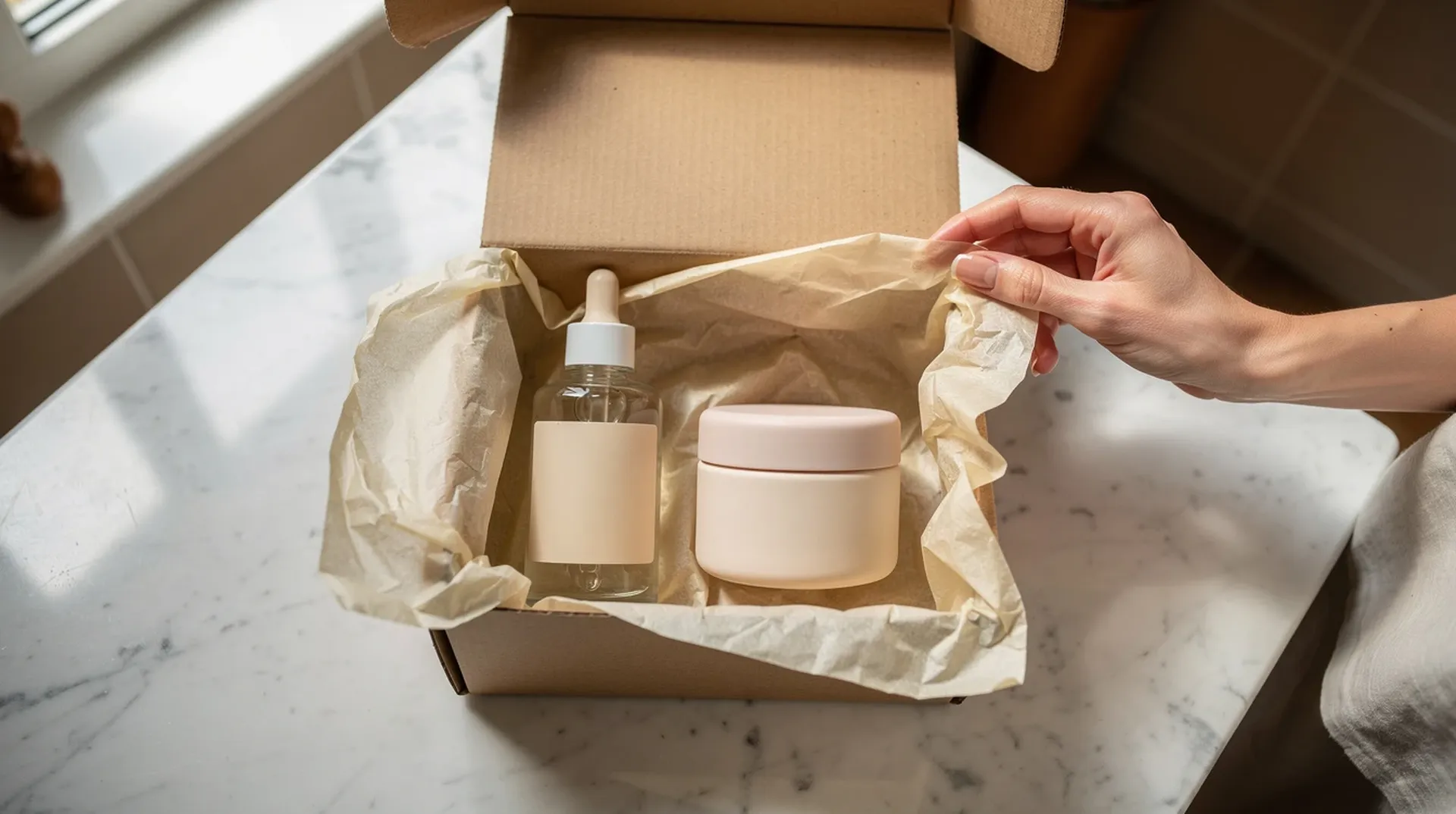
Luxury Cosmetics Packaging: How Mould-Inhibited Paper Protects Products and Brand Reputation
Introduction: When Packaging Becomes a Quality Problem
A luxury skincare brand ships 10,000 units to a Southeast Asian distributor. Three weeks later, the returns begin. Mould growth on inner packaging has contaminated outer boxes, raised customer complaints, and-in several cases-affected products directly. The financial loss is substantial. The reputation damage is harder to quantify but potentially worse.
This scenario repeats across the cosmetics and personal care industry more often than brands like to admit. Products that left the factory pristine arrive compromised because packaging materials themselves became vectors for fungal growth.
Mould-inhibited paper addresses this vulnerability directly. By incorporating anti-fungal treatments into packaging papers, brands can interrupt the contamination pathway before it begins.
This guide examines why cosmetics packaging is particularly vulnerable to mould, how mould-inhibited papers work, specification considerations, and the business case for protective packaging in premium beauty products.
Understanding the Mould Risk in Cosmetics Packaging

Why Cosmetics Products Are Vulnerable
Several factors combine to create elevated mould risk for cosmetics and personal care products:
Moisture introduction during manufacturing:
Water-based formulations introduce moisture to packaging environments
Production facilities may have ambient humidity variations
Bottling and packaging processes can create localised condensation
Supply chain humidity exposure:
Sea freight containers experience significant temperature and humidity fluctuations
Warehouse storage conditions vary widely, particularly in warmer climates
Last-mile delivery may expose products to uncontrolled environments
Product characteristics:
Organic and natural formulations often contain mould-susceptible ingredients
Reduced preservative systems (responding to "clean beauty" trends) lower product resistance
Water activity levels in many products support fungal growth
Packaging dwell time:
Products may sit in packaging for months before reaching consumers
Slower-moving SKUs face extended exposure periods
Seasonal products may be warehoused for long periods
The Business Impact of Mould Contamination
Mould problems cascade through multiple cost centres:
| Impact Area | Direct Costs | Indirect Costs |
|---|---|---|
| Product returns | Processing, shipping, disposal | Customer disappointment, lost repeat sales |
| Retailer chargebacks | Penalty fees, markdown demands | Damaged retail relationships |
| Recall scenarios | Logistics, destruction, replacement | Media coverage, social media criticism |
| Brand reputation | Crisis management, PR response | Long-term perception damage, trust erosion |
Identifying High-Risk Scenarios
Not all cosmetics packaging faces equal mould risk. Higher-risk scenarios include:
Product factors:
Natural/organic formulations with reduced preservatives
Water-based products with high water activity
Products containing plant-based oils susceptible to rancidity
Anything marketed as "preservative-free"
Distribution factors:
Export to tropical or humid climates
Sea freight rather than air
Extended warehouse storage
Distribution through channels with variable climate control
Packaging factors:
Paper-based components in direct product contact
Multi-layer packaging creating moisture trap potential
Cartons stored before filling
Long production-to-sale timelines
“We identified mould contamination as the root cause of 34% of our quality-related returns over a six-month period. Switching to mould-inhibited interleaving and box liners reduced quality returns by over 60%.”- Operations Director, Natural Skincare Brand
How Mould-Inhibited Paper Works

Treatment Technologies
Mould-inhibited papers use various active agents to prevent fungal growth:
Organic acid-based treatments: Propionic acid and sorbic acid derivatives create environments where common moulds cannot establish. These food-safe treatments have long track records and well-understood safety profiles.
Metal-based systems: Silver and zinc compounds provide antimicrobial activity. These offer broad-spectrum protection but may face higher regulatory scrutiny in some markets.
Natural extract treatments: Essential oil-based systems (thyme, oregano, cinnamon derivatives) provide anti-fungal properties with "natural" positioning. Performance may be less consistent than synthetic alternatives.
Mechanism of Action
Mould-inhibited papers work through several mechanisms:
Surface contact inhibition: Anti-fungal agents on paper surface prevent spore germination when fungal spores land on paper
Vapour phase protection: Some treatments release volatile anti-fungal compounds that protect nearby surfaces
Moisture management: Treatments may also modify paper's moisture absorption characteristics
Treatment Durability
Protection duration depends on:
Treatment concentration and type
Storage conditions (high humidity depletes some treatments faster)
Paper handling and abrasion
Packaging configuration (enclosed vs. open)
Typical protection periods:
Standard treatments: 6-12 months effective protection
Enhanced formulations: 12-24 months in normal conditions
Specify based on your supply chain timeline requirements
Applications in Cosmetics Packaging

Direct Product Contact
Soap wrapping (Soapwrap): Traditional soap wrap must prevent mould on soap surfaces during storage while providing attractive presentation. Mould-inhibited versions protect against ambient humidity exposure.
Typical specification: 30-40gsm greaseproof with MI treatment
Format: Sheets or rolls for manual/automatic wrapping
Print: Often Pantone-matched to brand colours
Cosmetic interleaving: Papers placed between products in transit or display packaging. Prevents product-to-product contact damage and provides mould protection.
Typical specification: 17-25gsm tissue with MI treatment
Format: Sheets sized to product dimensions
Usage: Between palettes, compacts, or skincare containers
Sachets and pouches: Sample sachets and single-use products benefit from MI papers when moisture sensitivity exists.
Secondary Packaging Protection
Box liners: Paper liners inside cartons protect product and packaging from humidity damage. Particularly valuable for export shipments.
Typical specification: 40-60gsm kraft with MI treatment
Format: Die-cut to box dimensions or continuous rolls
Application: Gift sets, multi-product boxes, subscription boxes
Carton overwrap: Protective wrap around finished cartons during storage and shipping. Creates barrier against humidity ingress.
Pallet wrap/case liners: Larger-format protection for bulk shipments, particularly sea freight where container humidity cycles are severe.
Specification Considerations
Paper Grade Selection
Match base paper to application requirements:
| Application | Base Paper | Typical Weight | Key Properties |
|---|---|---|---|
| Soap wrap | Greaseproof | 30-45gsm | Oil resistance, printability |
| Tissue interleaving | MF tissue | 17-21gsm | Softness, bulk |
| Box liners | Kraft | 40-70gsm | Strength, coverage |
| Pleat wrap | Glassine | 25-35gsm | Transparency option |
Presentation vs. Protection Balance
Cosmetics packaging must look premium. This creates trade-offs:
Printed papers:
Custom printing adds brand value
Some MI treatments affect print quality-test before committing
Consider printing on outer surface with MI treatment on inner
Coloured papers:
Coloured stocks available with MI treatment
Pantone matching maintains brand consistency
Deep colours may show handling marks more readily
Texture and feel:
MI treatment may slightly affect paper hand feel
Test tactile experience against brand standards
Premium brands should evaluate sensory aspects carefully
Regulatory Compliance
Cosmetics packaging faces regulatory requirements in multiple jurisdictions:
EU Cosmetics Regulation (EC 1223/2009):
Packaging must not transfer substances to products in quantities that could harm health
Material safety must be documented
FDA (US Market):
Packaging materials must be suitable for intended use
Any antimicrobial claims may trigger additional requirements
Practical steps:
Request compliance documentation from paper supplier
Understand which treatments are permitted in target markets
Consider whether "anti-mould" claims on consumer packaging are desired
Document due diligence for regulatory defence
Implementation: From Specification to Supply
Evaluation Process
Step 1: Risk Assessment Document your current mould-related quality issues:
Returns data analysis
Customer complaint patterns
Internal quality observations
Supply chain humidity exposure mapping
Step 2: Application Mapping Identify where mould-inhibited paper could intervene:
Direct product packaging
Secondary packaging
Transit protection
Warehouse storage protection
Step 3: Sample Testing Request samples and test under realistic conditions:
Storage at elevated humidity (accelerated conditions)
Real supply chain transit
Production line compatibility
Print and finishing performance
Step 4: Cost-Benefit Analysis Compare implementation cost against current mould-related costs:
Paper cost differential
Implementation changes required
Expected returns reduction
Risk mitigation value
Working with Your Converter
Effective specification requires converter partnership:
Information to provide:
Products being packaged
Current quality issues (be specific)
Target markets and distribution methods
Shelf life requirements
Brand presentation standards
Volume and format requirements
Questions to ask:
What MI treatment options do you offer?
What test data supports effectiveness claims?
Are there print or finishing limitations?
What is minimum order quantity?
What is lead time for custom specifications?
“Our converter suggested a combined approach-mould-inhibited tissue for direct product contact plus treated box liners for secondary packaging. This layered protection addressed both immediate and transit-related risks.”- Packaging Manager, Premium Soap Manufacturer
Beyond Mould: Complete Hygiene Packaging
Mould inhibition often exists within a broader hygiene packaging strategy:
Related Treatments
Moisture control: Desiccant sachets or papers absorb moisture within packaging, reducing humidity that promotes mould growth.
Barrier coatings: Wax or polymer barriers prevent moisture ingress from external environment.
Antimicrobial broader spectrum: Some applications may require protection against bacteria as well as fungi.
System Thinking
The most effective approach treats packaging as a system:
Control moisture at source: Ensure products are dry before packaging
Barrier moisture entry: External barriers prevent humidity ingress
Inhibit growth if moisture present: MI papers prevent growth despite humidity
Absorb ambient moisture: Desiccants reduce humidity within package
Each layer provides additional protection; relying on a single intervention creates vulnerability.
Case Study: Natural Skincare Brand

Background: UK-based natural skincare brand exporting to 12 markets, including high-humidity Southeast Asian destinations. Products marketed as "preservative-conscious" with minimal synthetic preservatives.
Problem:
4.7% return rate, with 31% of returns showing visible mould
Particularly severe from Singapore and Malaysia distribution
Returns processing costing approximately £45,000 annually
Social media complaints damaging brand perception
Analysis:
Products were packaged in attractive but untreated tissue paper
Box interiors lined with standard kraft
Sea freight containers showed 70-95% RH variation
8-12 week supply chain timeline
Solution implemented:
Mould-inhibited tissue for product wrapping (18gsm MI-treated)
MI-treated box liner (50gsm kraft with MI treatment)
Pantone printing maintained on outer packaging
Total packaging cost increase: £0.27 per unit
Results (6 months post-implementation):
Return rate: 1.8% (62% reduction)
Mould-related returns: 4% of total (versus 31% previously)
Annual returns processing cost reduction: approximately £28,000
Zero social media complaints referencing mould
ROI calculation:
Annual cost increase: 50,000 units × £0.27 = £13,500
Annual cost reduction: £28,000 (conservative, excluding brand benefit)
Net benefit: £14,500 annually
Payback: Immediate
Common Questions and Misconceptions
"Isn't mould inhibition only for food products?"
While food applications are common, hygiene and cosmetics products face similar biological contamination risks. Any organic material in humid conditions can support mould growth.
"Will treatment affect product safety?"
Properly specified MI papers use treatments with extensive safety data. However, validate that chosen treatments are permitted for your product category and markets.
"Can we just improve our supply chain instead?"
Supply chain improvements help but may not eliminate risk. MI papers provide protection against conditions outside your direct control-distributor warehouses, retailer stockrooms, consumer homes.
"Do natural products require special treatments?"
"Natural" MI treatments exist (essential oil-based), but may offer less consistent or durable protection than synthetic alternatives. Evaluate based on performance data, not marketing positioning.
"What about shelf life claims?"
MI paper protects packaging from mould, which may support product shelf life indirectly. However, any shelf life claims require validation through proper stability testing of your specific products.
Conclusion: Protection as Brand Investment
For cosmetics and personal care brands, packaging quality is product quality. Customers don't distinguish between product failure and packaging failure-they experience brand failure.
Mould-inhibited paper represents a modest investment that protects against disproportionate risk. The mathematics consistently favour protection: prevention costs pennies per unit; problems cost pounds per unit plus incalculable brand damage.
Key takeaways:
Assess your risk profile: Products with reduced preservatives, humid distribution routes, and extended shelf lives face highest risk
Implement layered protection: MI papers work best as part of a packaging system, not a single-point solution
Maintain brand presentation: MI treatment is compatible with premium aesthetics-specify appropriately
Document compliance: Ensure treatments are permitted in all target markets
Calculate true cost: Compare paper premium against returns, brand damage, and risk exposure
Related Articles
Paper Packaging Solutions: Solving Real Business Challenges with Specialty Converted Paper - the pillar guide for this topic.
Fish and Butcher Shop Packaging: The Complete Guide to Specialty Wrapping Papers - Specialty wrapping papers for wet protein - wet-strength, bonewrap, greaseproof, waxed kraft.
Industrial Anti-Corrosion VCI Papers: Complete Metal Protection Guide - VCI (vapour corrosion inhibitor) papers for metal protection - specification, ROI, and a clean alternative to oils.
Retail Brand Building with Custom Tissue Paper - Custom printed tissue for retail and e-commerce - specification, Pantone matching, design, and unboxing ROI.