
What Is Butcher Paper? UK Guide
The phrase "butcher paper" means three different things depending on whether you're talking to a UK butcher, an American BBQ enthusiast, or a stationer's catalogue. This guide unpacks the actual products, their UK trade specifications, and how to buy the right one for your application.
Three different products called "butcher paper"
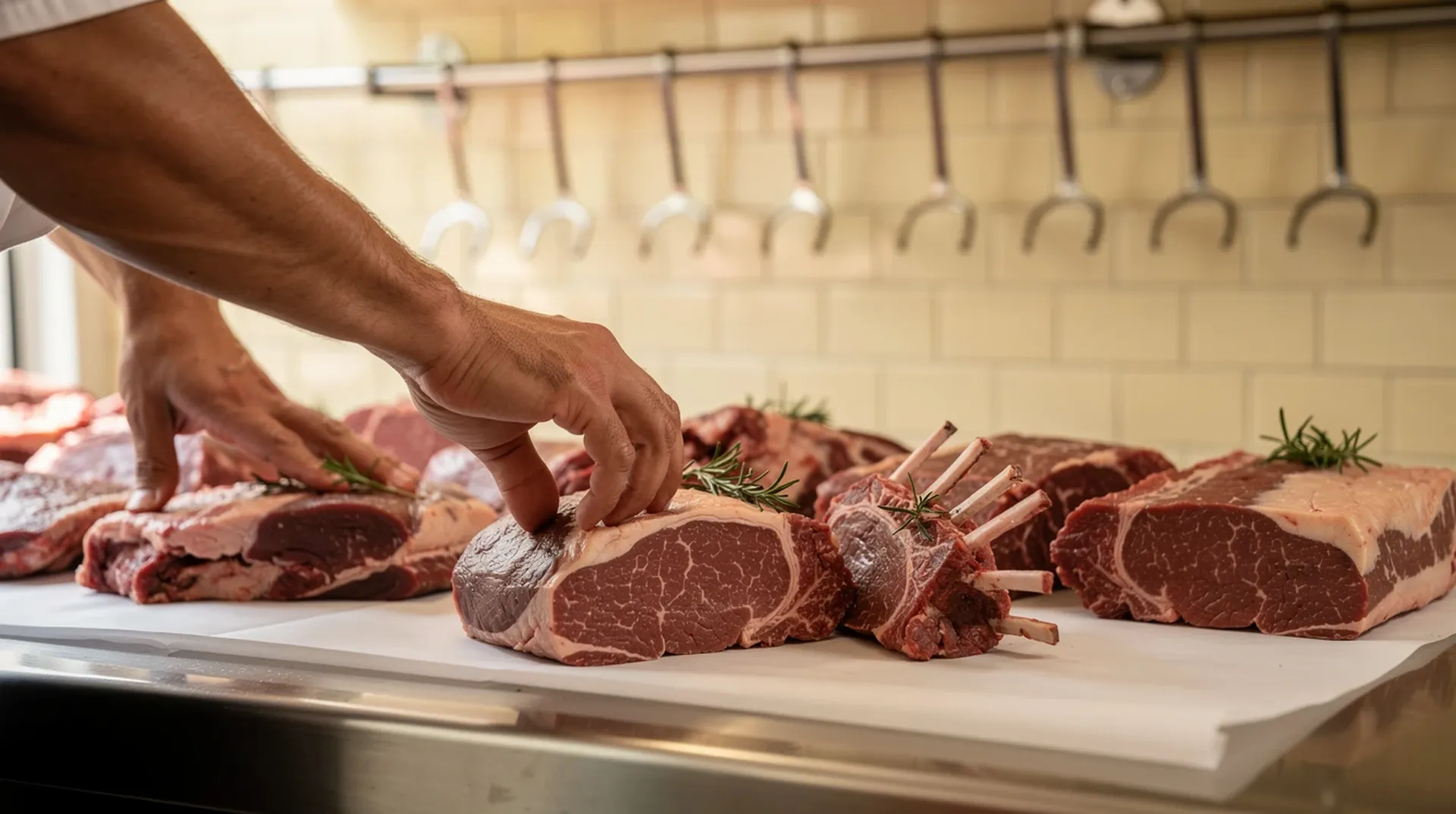
1. UK trade butcher paper / meat wrap. Heavy kraft paper (typically 60-80 gsm) treated with wet-strength resin so it doesn't fall apart when soaked with meat fluids. Often combined with a wax coating or greaseproof inner layer for grease resistance. This is what you get if you ask a UK food packaging supplier for "butcher paper."
2. American BBQ butcher paper. Lighter, uncoated kraft paper (typically 40-60 gsm), often pink or white, used as a smoking and presentation paper in barbecue cooking. Doesn't have wet-strength treatment because it doesn't need to handle wet protein at retail. Sold in UK retail to BBQ enthusiasts under the same "butcher paper" name, but spec is different.
3. Generic kraft sheet sold as "butcher paper." Plain unwaxed kraft sometimes labelled "butcher paper" in stationery and craft supplies. Not food-grade compliant, not wet-strength treated. Should not be used for direct food contact.
The product you actually need depends on application. The terminology overlap means specifying just "butcher paper" in a B2B procurement document is asking for problems.
What does UK trade butcher paper actually do?
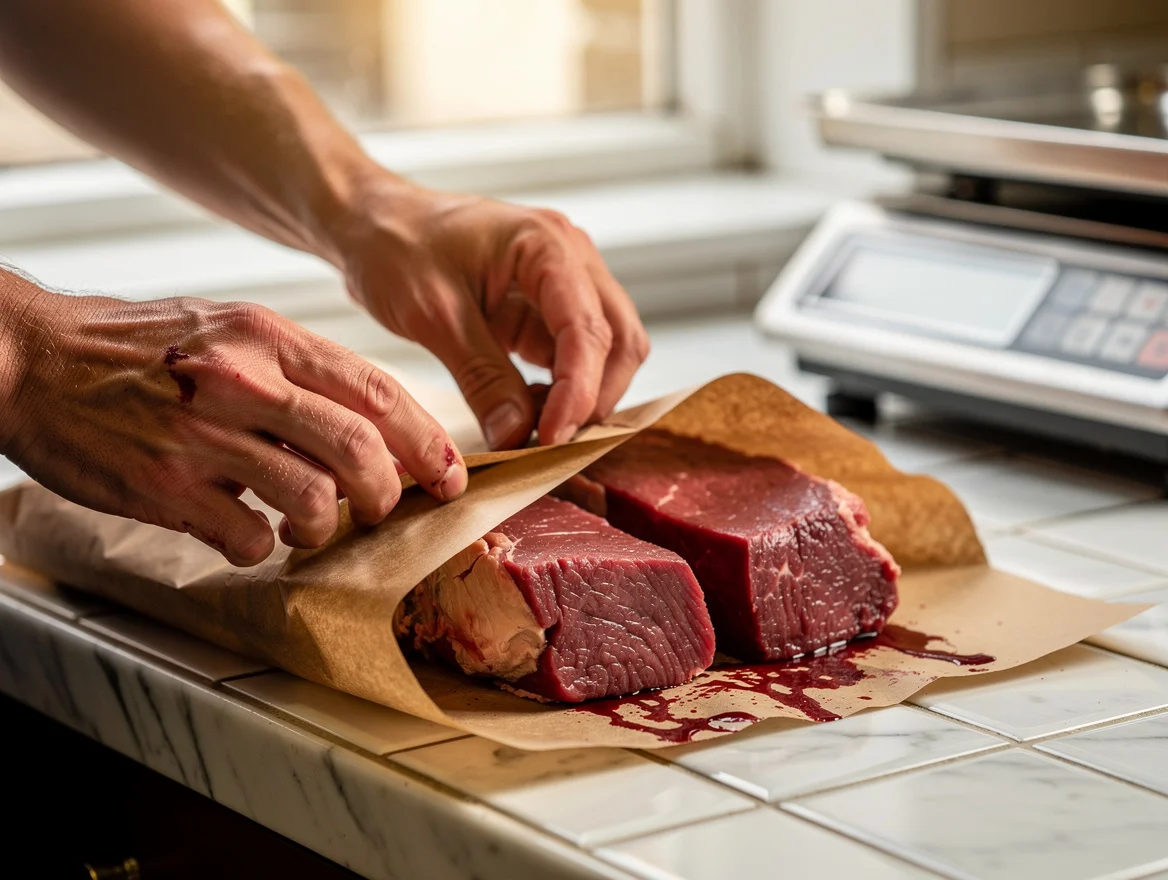
Wrapping wet protein at retail is harder on paper than most people realise. Within minutes of being placed on paper, a piece of fresh fish or meat releases:
Surface moisture from chilling/refrigeration
Blood / drip from cut surfaces
Free water from connective tissue and fat
Standard kraft paper soaked in this fluid loses tensile strength quickly. A bag tears. A wrap unravels. Surface staining shows through to the customer-facing side. A weak wrap presents badly and turns over a long-term presentation problem into a quick-disaster moment for a butcher's counter.
UK butcher paper solves this with three engineering choices:
Wet-strength resin added at the paper-making stage. Hydrophobic compounds (typically melamine-formaldehyde or polyamide-epichlorohydrin) bond with cellulose fibres and prevent them from disbonding when soaked. The paper retains 30-50% of its dry tensile strength even when fully wet — vs 5-10% for untreated kraft.
Sufficient gsm weight — 60-80 gsm provides physical robustness for handling without being so heavy as to be expensive or stiff.
Surface treatment — either waxed kraft (active moisture and grease barrier) or greaseproof-lined kraft (kraft strength outside, food-grade greaseproof inside). The choice depends on product and customer expectation.
UK butcher paper formats
| Format | Use |
|---|---|
| **Counter sheets** | Pre-cut sheets at counter for wrap-and-go service. Typically 380×500mm or 500×750mm |
| **Counter rolls** | Continuous rolls dispensed at the counter, cut to size by the butcher |
| **Greaseproof-lined kraft** | Greaseproof inside (food contact), kraft outside (strength + branding) |
| **Waxed kraft** | Wax-coated for moisture barrier; for fish and very wet products |
| **Bonewrap** | Heavy waxed kraft inner liner used inside vacuum pouches; protects bag from bone tips |
| **Bone guard** | Specifically engineered against puncture, used for cuts with sharp bone (chicken thighs, lamb chops, fish with fins) |
| **Burger paper / patty paper** | Lighter weight for individual patty separation; often silicone-coated or waxed |
For a full case study of how this plays out at a butcher's counter or fishmonger's, see fish, butcher and deli packaging.
How UK butcher paper differs from American BBQ butcher paper
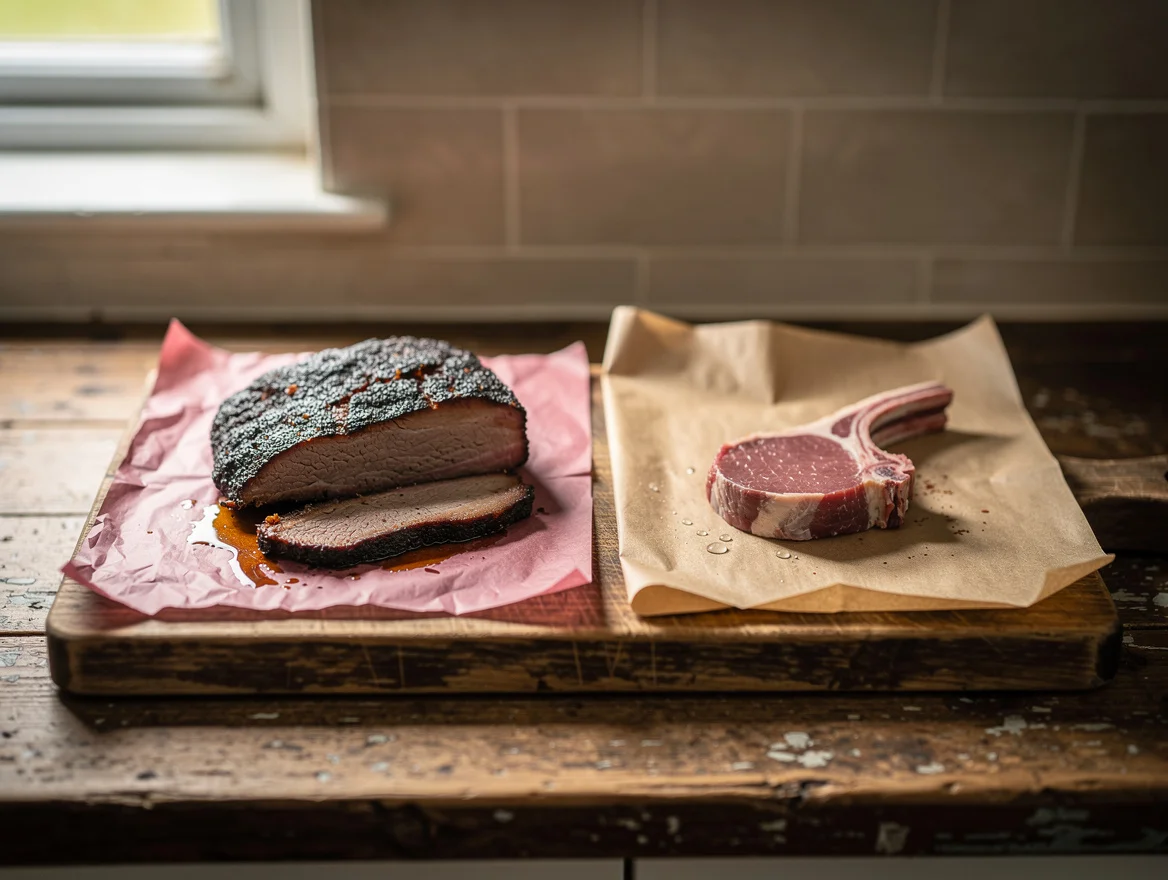
The American "butcher paper" used in BBQ cooking is unwaxed kraft, typically pink or white. It's used for two purposes:
The Texas crutch — wrapping smoked brisket in BBQ butcher paper during the final stretch of the cook to retain moisture without losing bark formation
Presentation — laying down butcher paper as a serving surface for whole hogs, brisket platters, etc.
For these applications, wet strength isn't needed because the cooked meat releases less liquid than raw, and the paper is single-use. Cost matters more than strength. A 50-60 gsm pink kraft works perfectly.
If you're a UK BBQ enthusiast looking for "butcher paper," the import specialty product (often labelled "pink butcher paper" or "BBQ paper") is what you want — not UK trade butcher paper which is over-engineered and doesn't have the same texture for cooking.
If you're a UK butcher or fishmonger looking for paper to wrap product at retail, UK trade butcher paper is what you want — the BBQ-style paper isn't strong enough.
What's "bonewrap" and why does it matter?
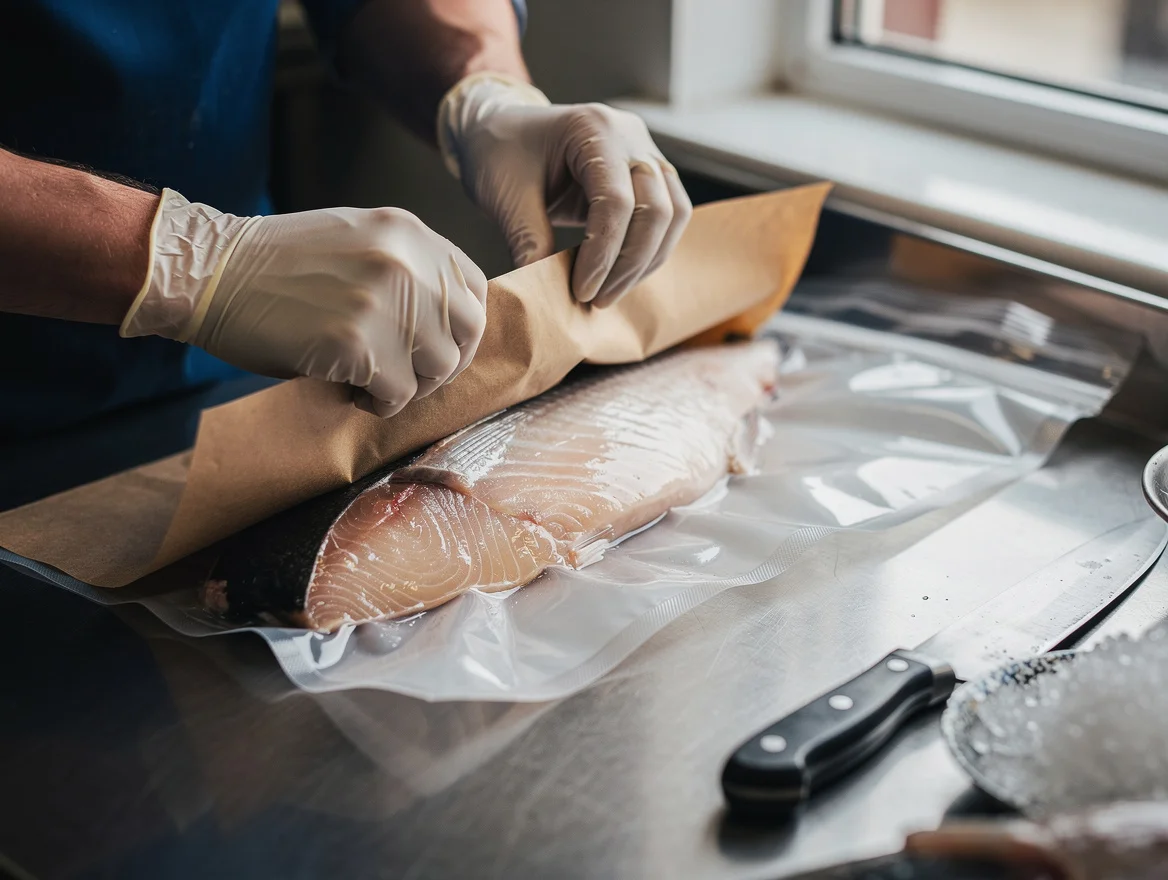
Bonewrap is one of GMLUK's specialty products, going back decades. It's heavy-duty waxed kraft paper, used as an inner liner inside vacuum pouches when packing meat or fish that has bones with sharp points (chicken thigh, fish with fins, lamb chops with rib tips, pork shoulder with bone-in).
Without bonewrap: the bone tip eventually punctures the vacuum bag during transit or storage. Loss of vacuum, loss of shelf life, loss of saleable product, customer complaint, possible recall.
With bonewrap: the heavy waxed kraft acts as a puncture-resistant inner buffer. The vacuum pouch survives the journey, the product surface stays sealed, the customer gets what they paid for.
This is the kind of spec-detail issue that separates suppliers who understand the application from those who just sell paper. We've been making bonewrap since the 1970s for UK and EU butchers.
How to specify butcher paper for procurement

If you're sourcing paper for a butchery, fishmonger, food processing facility or food brand, the spec details that matter:
Wet strength — yes/no? "Yes" for any wet protein wrap; "no" can be acceptable for cured/dry product
Substrate weight — 60-80 gsm typical for counter wrap; 80-100 gsm for bonewrap inserts
Surface treatment — uncoated kraft / waxed kraft / greaseproof-lined kraft — depends on product and barrier needs
Format — pre-cut sheets, counter rolls, custom-cut shapes for specific cuts
Print — branded for customer-facing wrap, plain for inner liner
Food contact compliance — EC 1935/2004 (UK retained) certification; verify EuPIA-compliant inks if printed
Annual volume — affects MOQ tier and pricing band
Provide all seven and any UK paper converter can give you a quote inside a working day. Provide just "butcher paper, please" and you'll get product mismatched to application.
Sustainability — what UK B2B buyers should know
Uncoated kraft butcher paper is straightforward: fully recyclable in UK paper streams (subject to food contamination), biodegradable, lower EPR fee banding, FSC-certifiable.
Waxed kraft is more nuanced — see our waxed paper page and wax coatings: balancing performance with environment for the recyclability detail.
For sustainability-led brands, the trade-off conversation is:
Uncoated kraft — more recyclable but doesn't perform on wet protein without wet-strength treatment (which most paper recycling streams accept)
Waxed kraft — performs on wet protein but recyclability depends on UK mill flotation pulping capacity
Greaseproof-lined kraft — middle ground; the kraft outer is recyclable, the greaseproof inner is recyclable, the lamination layer adds complexity
Most UK butchers default to greaseproof-lined kraft for retail counter use, which works for the application and is generally accepted in UK paper recycling.
Common mistakes in butcher paper procurement
Specifying generic "kraft paper" instead of wet-strength kraft — it'll perform fine in dry tests, fail in service
Importing American BBQ butcher paper for UK butchery use — wrong spec, will fail
Using stationery / craft kraft for food contact — not food-grade, audit risk
Buying the cheapest waxed kraft without checking food-contact compliance — Wax type affects compliance
Forgetting bonewrap for bone-in vacuum-packed product — common cause of vacuum failure complaints
Where this product line sits at GMLUK
We make UK trade butcher paper, including bonewrap, as part of our food-grade conversion business. Our die-cutting and waxing capacity is in-house, so we can produce custom-cut bonewrap shapes (e.g. ring shapes for chicken thighs, custom-tapered cuts for fish), which conventional sheeting can't.
Our products in this category:
Greaseproof paper — for cured / dry product, deli interleaving
Waxed paper — for wet protein, fish wrap, bonewrap
Kraft paper bags — for take-away applications
Pre-printed branded butcher paper — see printed greaseproof paper
For full case study, see fish, butcher and deli packaging.
Bottom line
UK trade butcher paper is a different product to American BBQ butcher paper. If you're a UK B2B buyer, specify by what you actually need: wet strength yes/no, substrate weight, surface treatment, food-contact compliance. The "butcher paper" label alone is too ambiguous to procure against.
Talk to our team about butcher paper specifications