
What are PFAS?
PFAS (per- and polyfluoroalkyl substances) are a large family of man-made chemicals built around carbon-fluorine bonds. Under the definition HSE asked for in its UK REACH call for evidence, which follows the OECD, a PFAS is any chemical with at least one fully fluorinated methyl (CF3) or methylene (CF2) carbon atom, with noted exceptions. Regulation (EU) 2025/40 describes them as a group of thousands of synthetic chemicals. The carbon-fluorine bond is one of the strongest in chemistry, so PFAS barely break down in the environment. That persistence is why they are called "forever chemicals".
Fidra, the environmental charity, says some well-researched PFAS have been linked to health concerns. In 2020 the European Food Safety Authority published a risk assessment covering four major PFAS in food. Regulation (EU) 2025/40 sets limits for PFAS as a group rather than naming single substances.
Why were PFAS used in food paper?
Because they make paper and board repel grease and moisture. Fidra says PFAS are used mainly in cardboard and paper packaging for this reason, and that PFAS are not an essential ingredient because PFAS-free alternatives are available. A fluorochemical treatment lets ordinary paper or moulded fibre hold greasy food without the dense structure of true greaseproof.
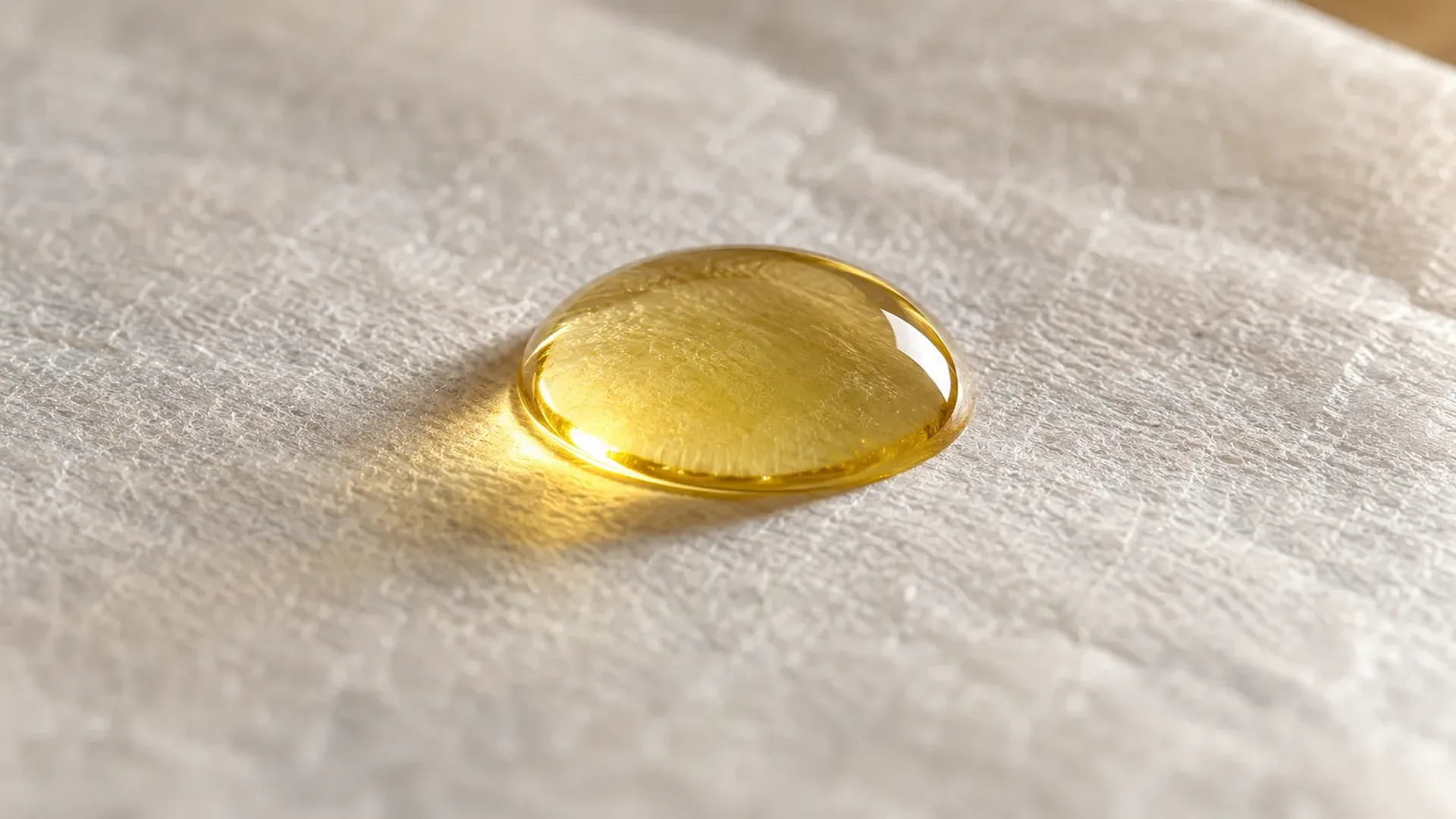
Campaign groups have tested UK food packaging for this. Fidra's 2020 research into own-brand packaging, published as "Forever Chemicals in the Food Aisle", found PFAS in packaging from 8 of 9 major UK supermarkets and in every takeaway tested, according to Fidra's food packaging page. Fidra also describes a simple "bead test" with olive oil that gives a preliminary indication of PFAS, to be followed by further testing.
Does greaseproof paper contain PFAS?

True greaseproof paper does not need PFAS. Its grease resistance comes from the mill beating the wood pulp fibres until they bond into a dense sheet with very few pores, so oil has nowhere to travel. Our guide to what greaseproof paper is explains the process.
The catch is the word "greaseproof" itself. Papers sold as greaseproof or grease-resistant can reach that performance in different ways: fibre structure, a starch or other surface treatment, a coating, or a fluorochemical treatment. The label does not tell you which. Only the supplier's specification and a written declaration do.
Does baking paper have PFAS?
Not usually from its non-stick coating. Baking paper gets its non-stick surface from silicone, and standard silicone coatings contain no fluorine. The base paper underneath is another matter, so the same rule applies: ask what gives the grease resistance and get the answer in writing.
Non-stick cookware is a separate case. The classic non-stick coating, PTFE, is a fluoropolymer built from fully fluorinated carbon atoms, so it falls within the PFAS definition above. That is a different material from the silicone coating on baking paper.
Which brand of parchment paper is PFAS free?
We do not test or rank retail brands, so we cannot name one. For trade buying, the brand matters less than the evidence: a written statement that no PFAS are intentionally added, from a supplier who can tell you what does give the paper its grease resistance. The checklist below is what we would ask for.
What are the UK and EU rules on PFAS in food packaging in 2026?
European Union. Article 5(5) of Regulation (EU) 2025/40, the Packaging and Packaging Waste Regulation, says that from 12 August 2026 food-contact packaging shall not be placed on the market if it contains PFAS at or above set limits. The limits are 25 parts per billion for any single PFAS and 250 parts per billion for the sum of PFAS, both measured by targeted analysis with polymeric PFAS excluded, and 50 parts per million for PFAS including polymeric PFAS. Where total fluorine exceeds 50 mg/kg, the supplier must on request provide proof of how much of it is PFAS and how much is not. The Commission must evaluate the paragraph by 12 August 2030. Fidra's food packaging page adds that Denmark committed to a ban on PFAS in paper and cardboard food packaging in 2020, and that a proposed universal PFAS restriction across the EU would likely cover food packaging if it comes into force.
Great Britain. We do not set out a Great Britain position in this guide, so confirm it with the Food Standards Agency before you rely on any claim that PFAS-free paper is or is not required. For context, the UK, Welsh and Scottish Governments asked the Health and Safety Executive and the Environment Agency to prepare a regulatory management options analysis for PFAS under UK REACH, and HSE's call for evidence lists surface coatings for food contact materials and packaging among PFAS uses. The general duty also applies: under Regulation (EC) 1935/2004 as retained in UK law, food-contact materials must not transfer substances to food in amounts that could endanger health.
Northern Ireland. The published text of Regulation (EU) 2025/40 does not itself mention Northern Ireland. If you place packaging on the Northern Ireland market, check the position with the Food Standards Agency.
For a food business supplying EU customers, the Article 5(5) limits apply from 12 August 2026. For goods sold only in Great Britain, confirm the position as above. Either way, Fidra reports that three UK supermarkets have committed to phase PFAS out of their own-brand packaging, so customer questions are likely. Our food contact compliance guide covers the wider regulatory picture.
How to ask a paper supplier about PFAS

Ask these per grade, not as a blanket company statement:
Is any PFAS intentionally added? Ask for a written statement covering the base paper, any coating, the inks and any adhesive.
What gives the paper its grease resistance? Fibre structure, starch, silicone, wax, polyethylene or a fluorochemical. A supplier who cannot answer cannot vouch for the paper.
Who issued the statement? If your supplier is a converter, the base paper comes from a mill. Ask whether the declaration comes from the mill and whether it covers the exact grade you are buying.
Is there test evidence? For packaging going to the EU, ask for results against the Article 5(5) limits in the Packaging and Packaging Waste Regulation, with the laboratory and test method named.
Do you have a declaration of compliance? Ask for the Regulation (EC) 1935/2004 declaration for the finished, printed product.
Will you tell me if anything changes? A change of mill or base grade can change the answer. Ask to be notified and re-declared.
PFAS and GMLUK greaseproof

Our greaseproof resists grease through the paper's structure, not a fluorochemical coating, and the burger wrap grade is specified Quilon-free and PFAS-free. Ask for the mill's PFAS declaration for the grade you are buying.
We buy our base paper from mills and convert and print it in Grantham, so PFAS declarations for the paper itself come from the mill. Ask us for the declaration for the grade you are buying, and for our declaration of compliance for the finished product. Our inks are water-based and comply with the EuPIA exclusion list. If you need a release grade, our silicone-coated papers get their release from a silicone coating; see release paper, and ask us what PFAS documentation is available for the grade you need.
Working with GMLUK
GMLUK converts and prints greaseproof, waxed and silicone-coated papers at our factory in Grantham, Lincolnshire, and supplies them compliant with Regulation (EC) 1935/2004 as retained in UK law. Minimum orders depend on grade and print; most plain and printed greaseproof starts at 10,000 sheets or the reel equivalent, and lead times are from 3 weeks. Ask for a quote below that, including combining with another order or a short run.
See greaseproof paper and greaseproof burger wrap, request free samples with the specification sheets, or get a quote.
Frequently asked questions
Does greaseproof paper contain PFAS?
True greaseproof paper does not need PFAS. It resists grease because its fibres are beaten into a dense sheet with very few pores. Some papers sold as grease-resistant have been treated with fluorochemicals, though, and the label alone will not tell you. Ask the supplier what gives the paper its grease resistance and for a written statement that no PFAS are intentionally added.
Does baking paper have PFAS?
Baking paper gets its non-stick surface from silicone, and standard silicone coatings contain no fluorine. The base paper could still have been treated, so for trade buying ask the supplier what provides the grease resistance and for a written statement that no PFAS are intentionally added to the paper, coating or inks.
Which brand of parchment paper is PFAS free?
We do not test retail brands, so we cannot name one. For trade orders, ask for a written statement that no PFAS are intentionally added, who issued it, and whether it covers the exact grade. Papers that resist grease through fibre structure or a silicone coating do not need fluorochemical treatment.
Is PFAS banned in food packaging in the UK?
The EU restricts PFAS in food-contact packaging above set limits from 12 August 2026 under Article 5(5) of Regulation (EU) 2025/40. We do not give a Great Britain position here, so check it with the Food Standards Agency. All food-contact materials must meet the general safety duty in Regulation (EC) 1935/2004, and packaging placed on the EU market must meet the EU limits.
Do paper plates have PFAS on them?
Some have. Fidra says PFAS are prevalent in paper and cardboard food packaging in the UK, and a 2021 European study it lists looked at paper, board and moulded fibre items including tableware. Plates are not a product we supply, but the same test applies to any food paper: ask what gives it grease resistance and get a written declaration.
What does PFAS-free mean on food paper?
It should mean no PFAS were intentionally added and, for EU packaging, that the paper stays below the PFAS limits in Article 5(5) of the Packaging and Packaging Waste Regulation. Ask whether a claim covers the base paper, coatings and inks, who made it, and whether there is test evidence behind it.