
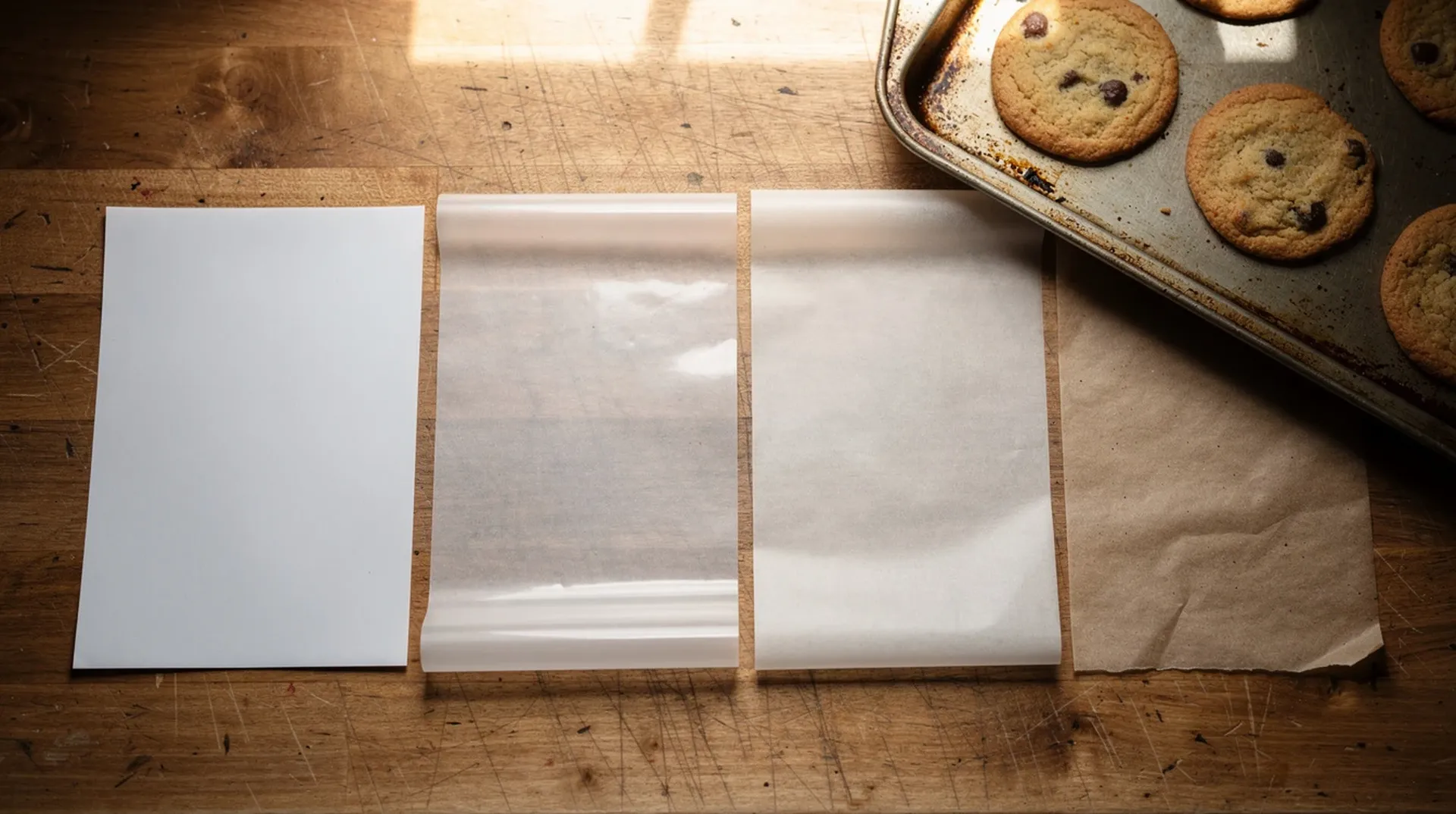
What Can I Use Instead of Greaseproof Paper?
The honest answer: it depends on what you're using greaseproof paper for. Wrapping, baking, interleaving, lining trays and packaging are all different jobs, and the right alternative differs for each. This guide walks through the realistic substitutes for each application, from a UK paper manufacturer's perspective.
Quick answers by application
| What you're doing | Best alternative | Why |
|---|---|---|
| Wrapping cold sandwiches/food | Wax paper, kraft paper, parchment paper | All work; wax paper adds moisture resistance |
| Oven-baking (low temp) | Parchment / baking paper | Non-stick + heat-stable to ~230°C |
| Oven-roasting (above 220°C) | Silicone mat, oven-safe foil | Both heat-stable above paper limits |
| Lining a cake tin | Parchment paper, butter + flour | Parchment is most reliable |
| Microwave heating | Plain plate, ceramic dish, microwave-safe paper | Greaseproof and parchment generally fine; never use foil |
| Interleaving food layers | Silicone-coated greaseproof, wax paper | Depending on grease/moisture profile |
| Wrapping fatty / oily food | Wax paper or PE-coated paper | Active barrier vs greaseproof's passive resistance |
| Wet protein (fish, meat) | Wax paper or wet-strength butcher paper | Greaseproof alone fails when wet |
| Industrial / non-food | Plain kraft, PE-coated paper, plastic film | Application-dependent |
Alternative 1: Parchment / baking paper
The closest functional alternative for most baking applications. Parchment paper is silicone-coated paper that delivers non-stick + heat resistance to about 230°C.
When parchment beats greaseproof:
Baking cookies, meringues, anything sticky
Lining cake tins where clean release matters
Higher-temperature roasting (up to ~230°C)
When parchment loses:
Cost — typically 1.5-2× greaseproof
Recyclability — silicone coating excludes it from many UK paper recycling streams
Reusability is limited (2-3 uses); after that release performance drops
For our full comparison see greaseproof vs parchment paper.
Alternative 2: Waxed paper
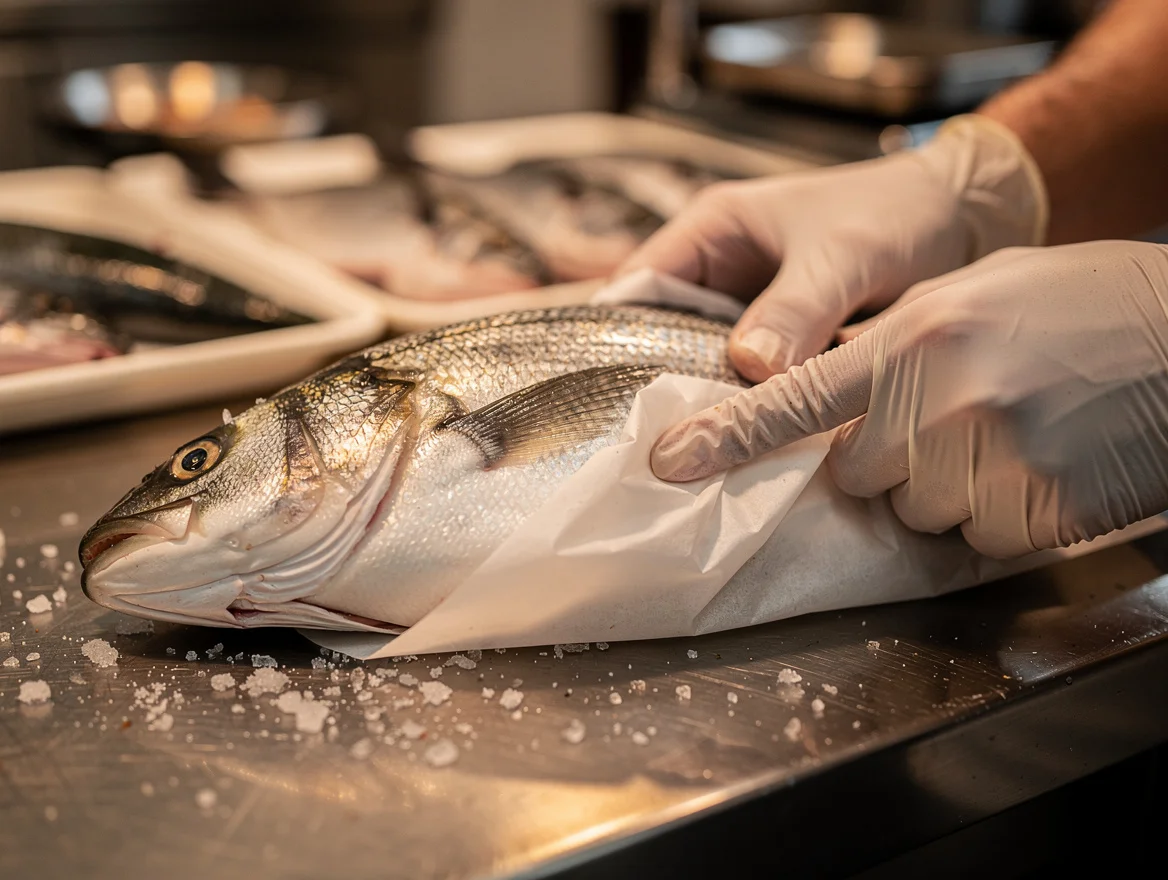
Waxed paper has a thin wax coating (paraffin or PE wax) on one or both sides, providing moisture and grease resistance. It works as a direct alternative to greaseproof for wrapping, interleaving and short-term packaging — but not for baking.
When wax paper beats greaseproof:
Active moisture barrier (greaseproof passes water vapour)
Heat-sealable for form-fill applications
Wet protein wrapping (fish, meat) where wet-strength matters
Heat retention for hot food wrap
When wax paper loses:
Not oven-safe — wax melts at low oven temperatures
Recyclability is more complex (depends on UK mill flotation pulping)
Higher EPR fee banding than uncoated greaseproof
More compliance verification required (food-contact wax type)
See our waxed paper range for grade options. For background on wax types and sustainability, see wax coatings: balancing performance with environment.
Alternative 3: Plain kraft paper
For applications where you don't actually need grease resistance (and many don't), plain kraft is cheaper and simpler. Use kraft when:
You're wrapping dry product
The visible "feel" of brown kraft suits the brand
You want full recyclability with no coating questions
Cost is the dominant criterion
Kraft paper is the substrate base for most of our converted products — see kraft paper bags for the bag-form version.
When kraft beats greaseproof:
Lower cost
Stronger fibre — handles weight and tension better
Aesthetic / brand fit for "natural" or "artisan" positioning
Universal recyclability
When kraft loses:
No grease resistance — fats and oils pass through quickly
Less smooth surface for printing fine detail
Higher porosity to moisture
Alternative 4: Silicone baking mats
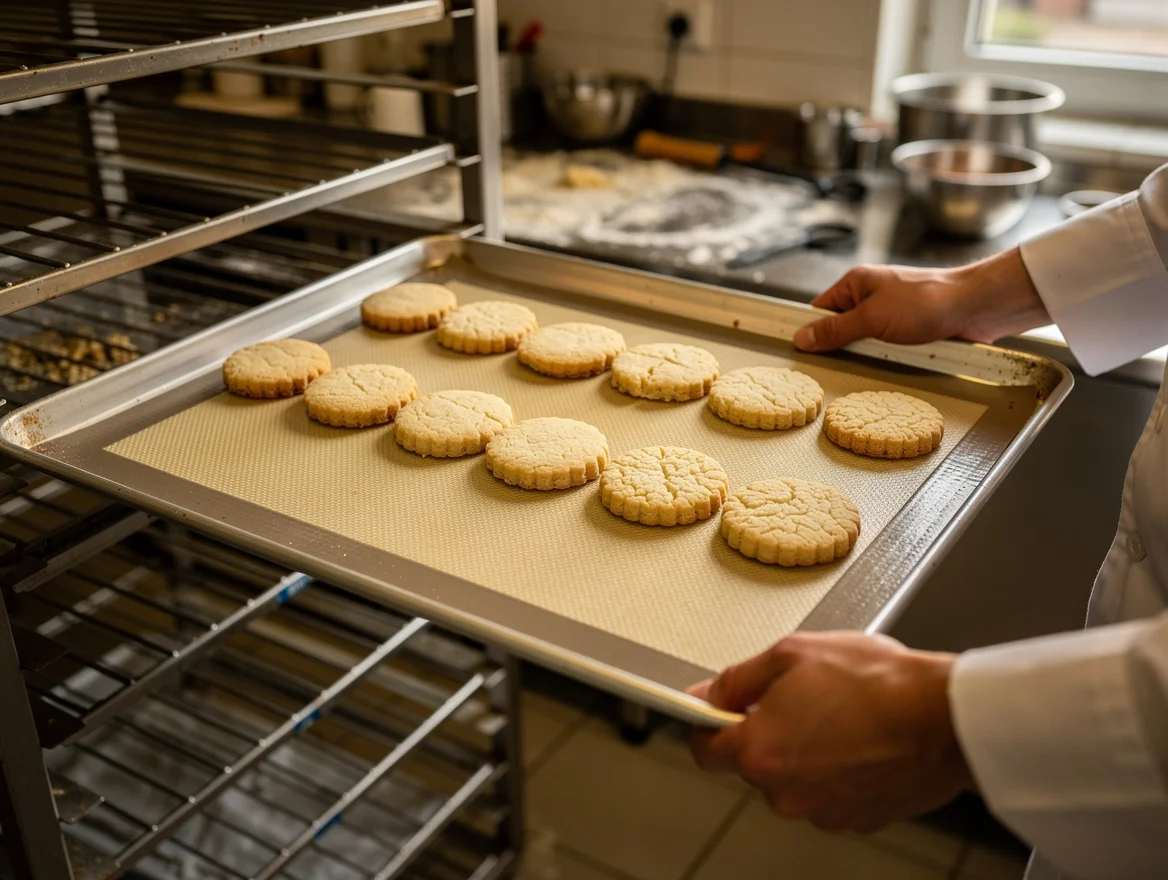
Reusable silicone mats are the clear winner for repeat-use commercial baking. Heat-stable to about 250°C, non-stick by design, and reusable hundreds of times.
When silicone mats beat greaseproof:
Higher temperature tolerance
Reusable — drastically lower per-use cost
More consistent baking results
No paper waste
Better non-stick performance even than parchment
When silicone mats lose:
Not a wrapping or interleaving alternative — only tray lining
Higher upfront cost
Need washing between uses
Don't fit non-flat applications (curved trays, parchment cones, etc.)
For commercial bakeries baking the same product daily, silicone mats are usually a better lifecycle choice than disposable paper. For mixed-product bakeries with frequent SKU changes, paper retains advantages.
Alternative 5: Aluminium foil
Foil is grease- and moisture-resistant, oven-safe to high temperatures, and recyclable in UK streams. Where it works, it's a solid alternative.
When foil beats greaseproof:
Higher oven temperatures (300°C+)
Wraps and seals around irregular shapes
Reflective — useful for browning/insulating in cooking
Active moisture barrier
When foil loses:
Not microwave-safe
Reactive with acidic foods (citrus, tomatoes, vinegars)
Higher carbon footprint per unit than paper
Can puncture and tear at thin gauge
Doesn't print well for branded packaging
Alternative 6: Wet-strength butcher paper
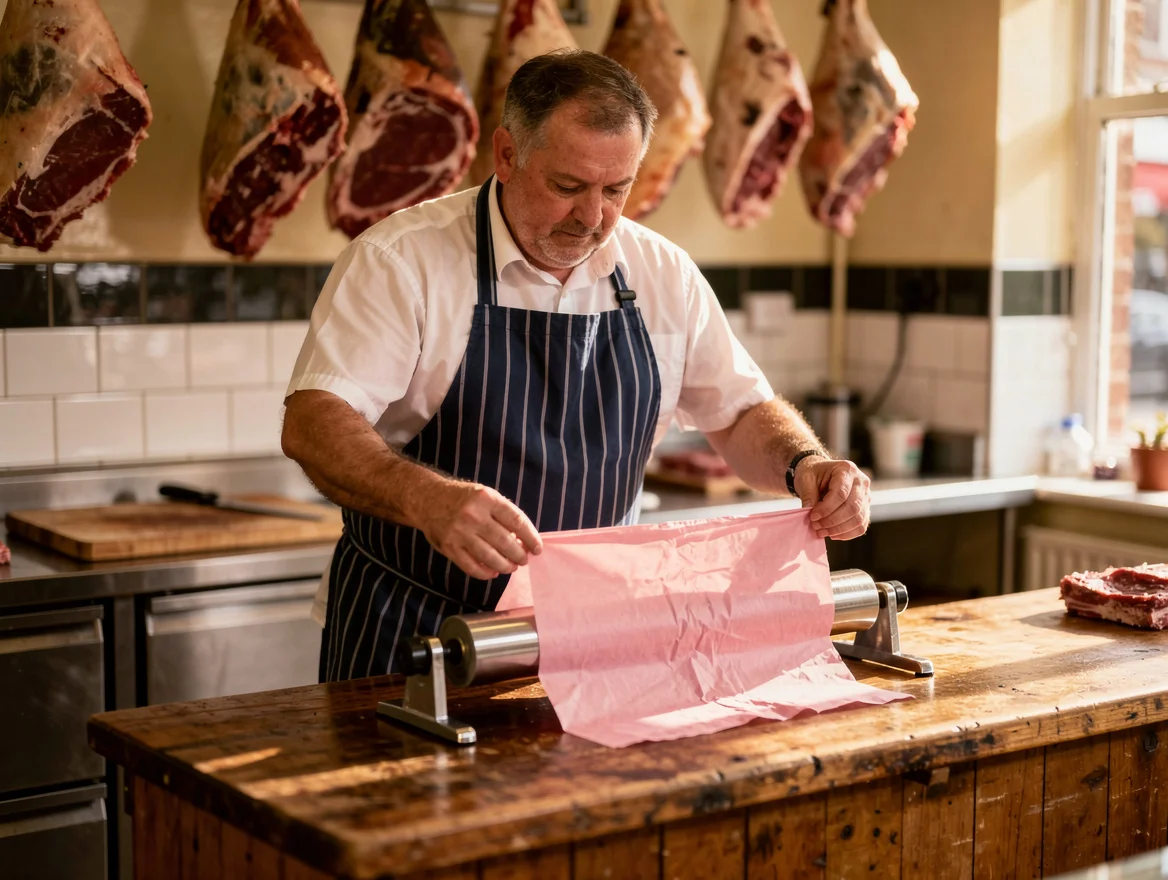
Specifically for wet protein wrapping (fish, meat, blood-rich products), butcher paper with wet-strength treatment outperforms standard greaseproof. The wet-strength resin allows the paper to remain intact even when soaked.
This is what UK butchers and fishmongers actually use under the counter — not consumer "greaseproof paper from a supermarket roll." See what is butcher paper? UK guide for the full spec story.
Alternative 7: PE-coated / laminated paper
Where you need the strongest possible barrier — fully waterproof, heat-sealable, dimensional stability — polyethylene-coated paper is the answer. Used in: fast food cup paper, soup containers, grease-and-water-resistant heavy wrapping.
Trade-off: PE-coated paper triggers higher EPR fees, requires the same recycling infrastructure as plastic, and complicates sustainability reporting. Use only when uncoated alternatives genuinely fail the application — and verify that against actual testing, not assumed performance.
Alternative 8: Reusable beeswax wrap
For consumer / domestic kitchen use, beeswax wrap is genuinely reusable and biodegradable. The cotton substrate is coated with beeswax, jojoba oil and tree resin to provide a flexible, slightly sticky wrap that conforms to bowls, blocks of cheese and similar items.
When beeswax wrap works:
Domestic kitchen storage of cheese, half-onions, sandwich wrap
Consumer / artisan brand fit
Sustainability-led messaging
When beeswax wrap doesn't work:
Industrial volume — can't be commercially produced at packaging scale
Hot food (wax softens and transfers)
Raw meat / fish (food-safety concerns with porous wax surface)
Repeated dishwashing — degrades quickly
Not a B2B alternative, but worth flagging for completeness.
Bad alternatives to avoid
Cling film / plastic wrap — not heat-stable, EPR-disadvantaged, recyclability is poor in most UK kerbside streams
Newspaper — printing inks are not food-safe under UK regulations; widely used historically in fish-and-chip shops but now banned for direct food contact
Brown paper bags / shopping bags — usually not food-grade rated; check the spec
Recycled craft / brown paper from packing — same issue, no food-contact certification
Random kitchen paper / kitchen roll — not designed for grease resistance, fibres can shed onto food
Decision framework for B2B procurement

If you're specifying paper for a food product or process, the questions in order:
Does it need to be oven-safe? Parchment paper, foil, or silicone mat. Not greaseproof above ~220°C, and never wax paper
Does it need active moisture barrier? Wax paper, PE-coated paper, or foil. Greaseproof is grease-resistant only
Does it need to be food-contact compliant? Verify EC 1935/2004 compliance. Standard greaseproof, food-grade wax paper, food-grade parchment. Not consumer wrap or paper bag stock
Does it need to be recyclable? Uncoated greaseproof, plain kraft. Silicone-coated and wax-coated alternatives have more limited recyclability
Does it need to be printed? Greaseproof, kraft paper, or pre-print waxed paper (print before wax). Parchment and foil don't print as cleanly
What volume? Below ~50,000 sheets, retail-pack alternatives may be more cost-effective; above, custom-spec paper from a converter
Why this matters more for B2B than consumer use
For domestic cooking, picking the wrong paper means a slightly sticky cookie or a soggy wrap. For B2B procurement at volume, it means:
Wrong product spec = supply chain headaches
Wrong recyclability = higher EPR fees and complex sustainability reporting
Wrong food-contact compliance = audit risk and potential recalls
Wrong cost basis = margin erosion at scale
Talk to a converter that actually makes the paper, not a stockist that sells whatever's in the warehouse. A 30-minute spec conversation up front saves months of supply chain rework later.
Bottom line
For most B2B applications where greaseproof paper has been specified, greaseproof remains the right answer — uncoated, recyclable, food-safe, lowest EPR fees, lowest cost. For the cases where it isn't right (active moisture barrier, oven baking, non-stick performance), the alternatives above each have a specific window where they win.
Browse our greaseproof paper range Talk to our spec team