

Sustainable Food Packaging UK — Buyer's Decision Guide
If you're a UK brand, packaging buyer or operations manager evaluating sustainable food packaging in 2026, the marketing landscape is loud and the technical reality is nuanced. This guide is written from a paper manufacturer's perspective — i.e. a supplier with material conflicts of interest in some places — but with the goal of giving B2B buyers a usable framework for cutting through the noise.
The honest landscape
The sustainable packaging market is structurally cluttered with marketing claims that don't always survive technical scrutiny. Compostable claims that require industrial composting infrastructure most UK consumers don't have access to. "100% recyclable" claims for materials that are technically recyclable but rarely actually recycled in practice. Bio-based labels that don't address end-of-life. Recycled content claims at percentages that aren't verified.
This isn't a moral failure of the industry — it's a consequence of buyers asking for "sustainable packaging" as a binary attribute when sustainability is multi-dimensional and application-specific. If your spec is "make it sustainable," suppliers will market the most attractive-sounding aspect of their product. If your spec is "what specifications minimise lifecycle environmental impact for this specific application?" you get more useful answers.
The five dimensions that actually matter
For a robust evaluation, sustainability of food packaging breaks into five dimensions. Trade-offs between these are the substance of real decisions.
1. Sourcing — what the packaging is made from
For paper:
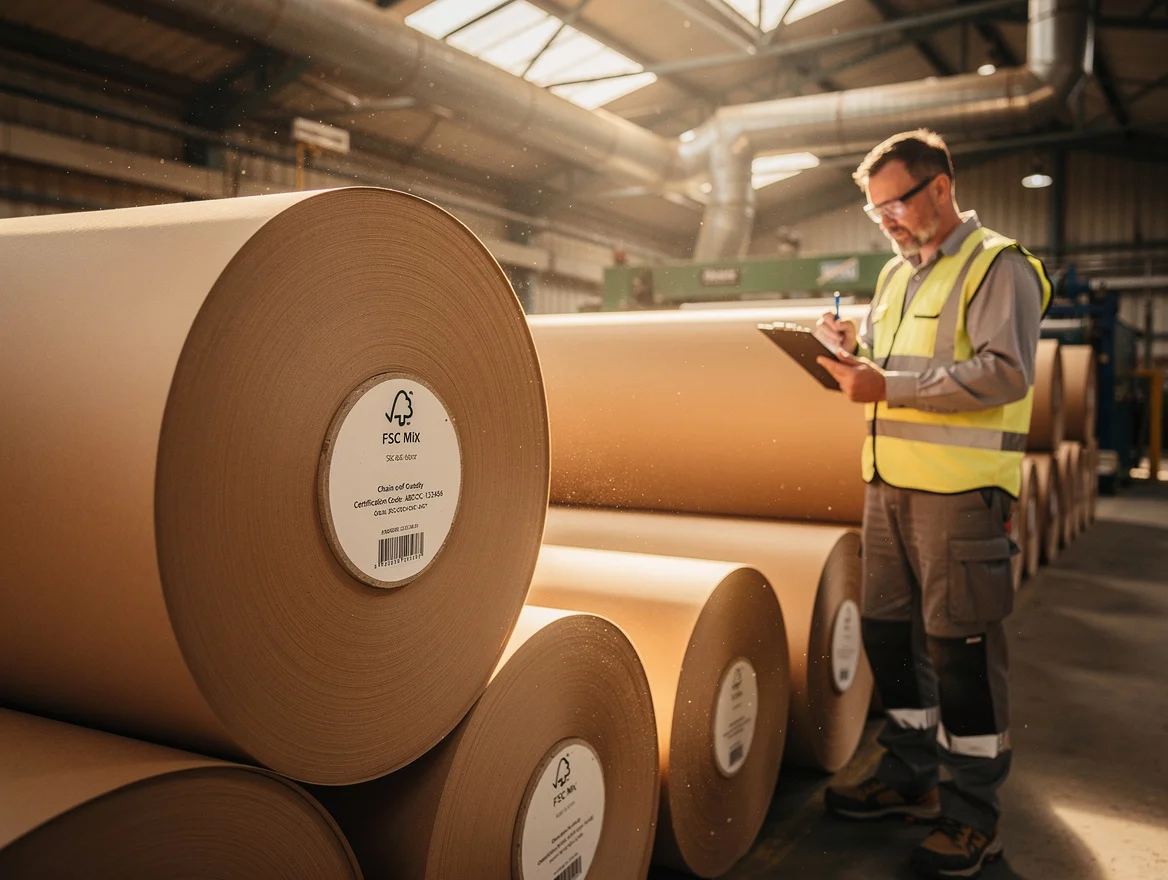
FSC or PEFC chain of custody — verifies forest source
Virgin vs recycled fibre — recycled has lower upstream carbon but degrades fibre length over cycles; food contact often requires virgin fibre
UK or short-haul European source vs Asian import — transport carbon differential is significant
Pulp processing — ECF (elemental chlorine free) and TCF (totally chlorine free) reduce manufacturing impact
For coated paper:
Coating chemistry source — bio-based vs petroleum-derived; soy/beeswax vs paraffin/PE wax
Ink components — water-based vs solvent vs UV-cured; pigment sources
2. Manufacturing — the converting process
Energy mix at the converter — % renewable, on-site generation, carbon intensity per tonne
Water use and recycling — paper converting uses water; modern facilities recirculate 90%+
Process emissions — VOCs from inks, coatings; bleaching by-products
Waste rates — set-up waste, off-cuts, rejected output
3. Use phase — what the packaging does in service
Material efficiency — does the packaging do its job at minimum weight/material?
Shelf life enabled — better packaging less food waste; food waste typically dominates packaging waste in lifecycle terms
Transport efficiency — packaging that nests, stacks or transports densely uses less transport carbon per unit
Use phase failures — packaging that fails causes both packaging waste and product loss
4. End-of-life — what happens after use
Recyclability in actual UK infrastructure — not just "technically recyclable"
Recycling rate achieved — paper packaging in UK averages ~75% recovery; specific waxed/coated grades are lower
Compostability — industrial vs home compost; certified to EN 13432 / ASTM D6400
Biodegradability — uncoated paper is naturally biodegradable; coated grades vary
EPR fee banding — quantifies the financial signal for end-of-life management
Contamination tolerance — does the packaging survive realistic food residue and still recycle?
5. Communication — what you can credibly claim
Labelling certification — recyclable, FSC, biodegradable claims must be verified
Customer communication — clear disposal instructions
Reporting — Scope 3 emissions, packaging tonnage, recyclability percentages
Greenwashing risk — claims that sound stronger than the technical reality damage trust
The decision framework — six questions

For a specific packaging application, ask:
1. What is the packaging's primary function?
A primary function (food safety, freshness, transport protection, brand presence) shouldn't be compromised in pursuit of sustainability. Failed packaging causes more waste than non-optimal packaging.
2. What is the realistic end-of-life pathway?
UK households mostly recycle through kerbside paper streams. Industrial composting is rare. Home composting works for some materials in some conditions. Specifying compostable packaging that actually goes to landfill is worse than recyclable packaging that goes to recycling.
3. What's the per-unit lifecycle carbon?
Production + transport + end-of-life. Heavier packaging usually loses on production; better-protected product wins on use phase via reduced food waste. Get supplier data, don't accept generic claims.
4. What does the EPR fee banding look like?
For UK buyers, EPR is the structural cost signal that aligns with sustainability. Lower-banded specs are usually genuinely more sustainable; the banding system is imperfect but directionally correct.
5. What can I credibly say to my customers?
Greenwashing risk is high. Be specific: "FSC Mix paper, recyclable in standard UK paper streams" is better than "100% sustainable." If you can't verify it, don't claim it.
6. What's the cost vs benefit?
Genuinely sustainable packaging often costs more than unverified equivalents. But the cost differential should be measurable — and the benefit (reduced EPR, lower carbon reporting, customer trust) should be quantifiable too.
The sustainable paper packaging hierarchy
For UK food packaging, here's how typical paper specs rank on overall sustainability:
| Tier | Specification | Best for |
|---|---|---|
| **Tier 1 — most sustainable** | Uncoated FSC-certified greaseproof paper or kraft paper | Dry product wrap, interleaving, retail packaging |
| **Tier 2** | Aqueous-coated FSC paper | Light moisture barrier applications, replacing plastic film |
| **Tier 3** | Bio-wax or paraffin-wax coated FSC paper | Active moisture/grease barrier, food service wrap |
| **Tier 4** | Silicone-coated paper | Release applications where alternative isn't available |
| **Tier 5 — least sustainable paper** | PE-laminated paper, multi-material composites | Heavy barrier needs only |
For most food packaging applications, you can stay in Tier 1-3.
For brands targeting sustainability leadership, Tier 1 with strong communication is the position to occupy. For brands managing performance constraints, Tier 2-3 is often the right balance. Tier 4-5 should be specifically justified by performance need that lower tiers can't meet.
Common sustainability mistakes in B2B procurement
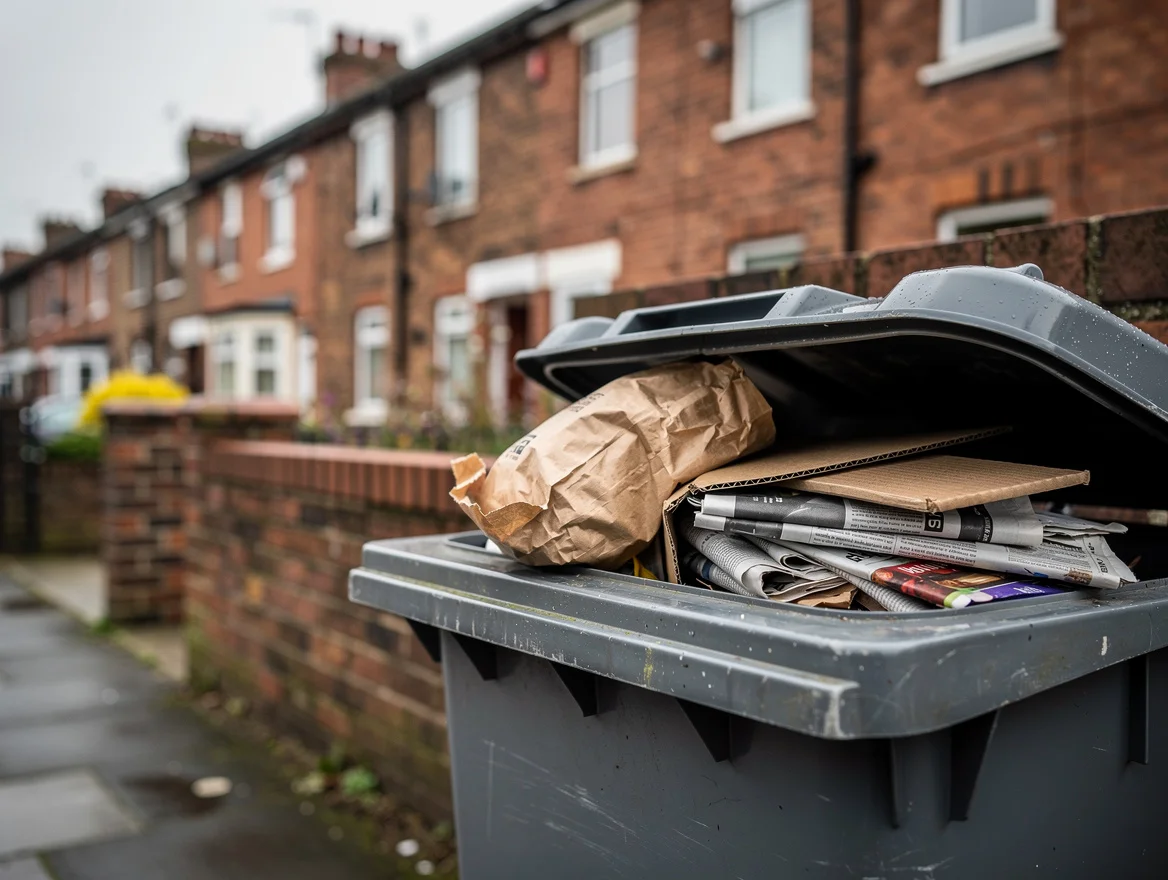
Compostable claims without infrastructure — "compostable" packaging that requires industrial composting facilities isn't compostable in practice for UK consumers. Most "compostable" packaging in UK supply chains ends up in general waste or general recycling
Bio-based ≠ better — bio-based materials can be biodegradable, recyclable, both or neither. Verify the actual end-of-life behaviour, not just the source
Recycled content fixation — high recycled content can be a virtue but also signals lower fibre quality and may exclude the material from food contact applications. Optimise for recyclability rather than recycled content where there's a trade-off
Heavy = robust = sustainable — over-specifying weight increases material use and EPR fees without proportionally reducing waste
Local sourcing without verification — "British made" can mean assembled in the UK from imported substrate. Check the chain of custody
Dropping in alternative materials without performance testing — replacing PE-coated paper with bio-wax coated paper without testing in actual application leads to in-service failures and worse net outcomes
Treating sustainability as binary — "sustainable / not sustainable" labels are less useful than measured improvement against specific dimensions
How to evaluate a paper packaging supplier on sustainability
A supplier with credible sustainability practice can answer these without hesitation:
What percentage of base paper is FSC or PEFC certified, with current chain of custody certificate number?
What's your ECF/TCF status and bleaching chemistry?
What percentage of facility energy is renewable, and what's the per-tonne emissions intensity?
What's your water consumption per tonne of finished product, and what's the recirculation rate?
For each product line, what's the EPR classification under current UK rules?
What's the typical recycling rate achieved for this product in UK infrastructure (not theoretical recyclability)?
Have your products been tested under EN 13430 (recyclability)?
Can you provide a Declaration of Compliance and migration test data for food contact?
What's your average transport distance to UK customer base?
What R&D investment goes into improving sustainability profile, and what specific projects are active?
If a supplier can't answer specifically and transparently, the sustainability claims deserve scrutiny.
What GMLUK can support
We're a UK paper converter rather than a sustainability consultancy, but we run sustainability assessments as part of standard customer support. For your packaging spec, we can provide:
FSC chain of custody documentation
EPR classification for current and proposed specs
Recyclability assessment in actual UK paper recovery infrastructure
Migration testing data for food-contact applications
Carbon footprint estimate per unit (manufacturing + transport)
Sustainability comparison vs alternative specs
Documentation suitable for customer-facing reporting
For our full sustainability position and capabilities, see the sustainability pillar and individual articles on biodegradability, carbon footprint, circular economy, wax coatings, and measuring sustainability.
Bottom line
Sustainable food packaging is a multi-dimensional decision, not a binary attribute. For UK B2B procurement, the framework is:
Optimise for recyclability in actual UK infrastructure, not theoretical
Target lower EPR fee bands through coating choice, weight optimisation and single-material design
Verify all claims through certification, testing or supplier evidence
Don't sacrifice in-service performance — failed packaging is the worst sustainability outcome
Communicate specifically to customers, not generically
The buyers winning at sustainable packaging in 2026 aren't those buying the most aggressively-marketed eco-product. They're those running structured spec evaluations against measured sustainability dimensions, with their packaging supplier as a transparent partner in the process.
Browse our sustainable paper packaging range Talk to us about sustainability assessment for your spec