
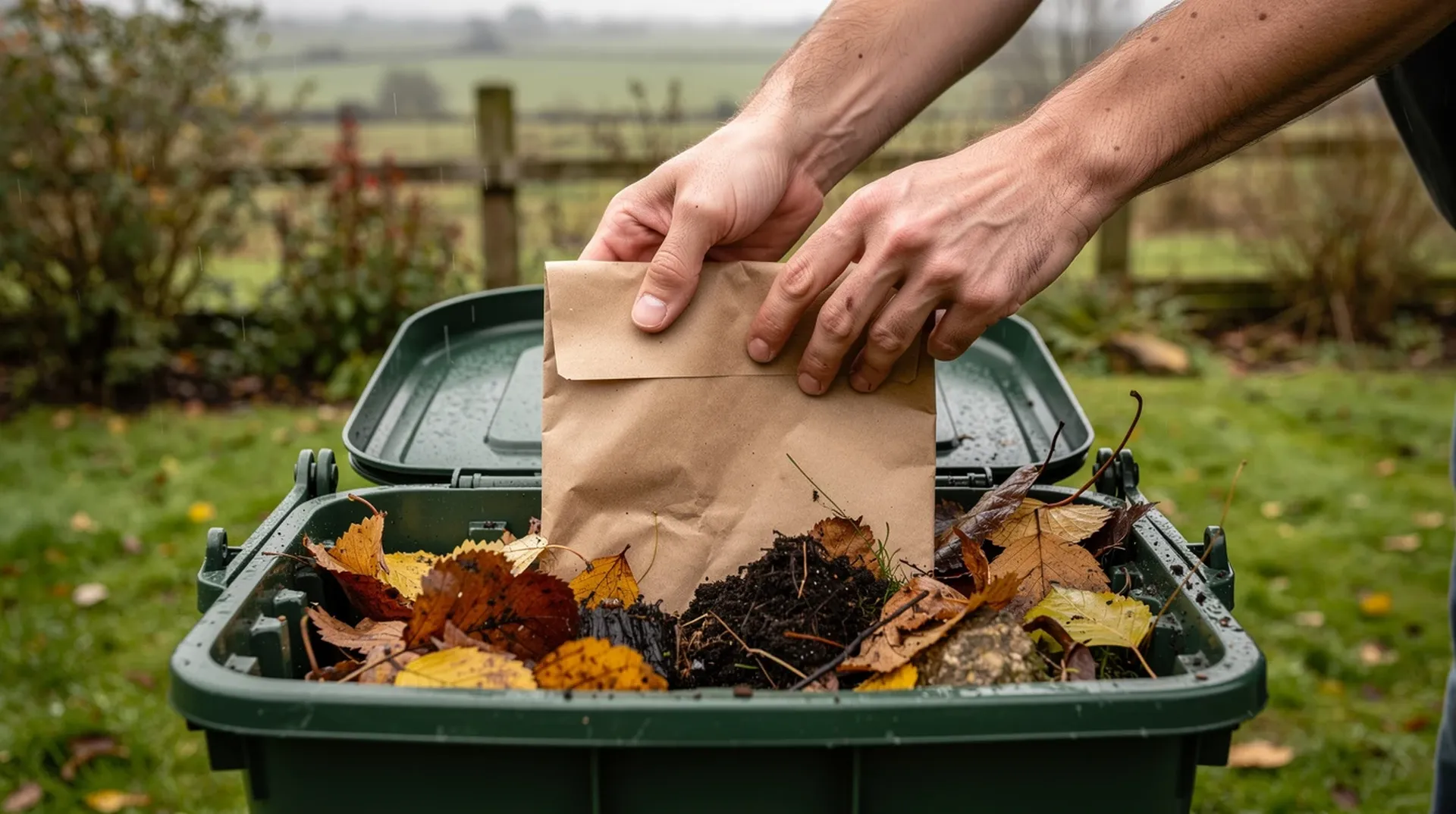
The Problem: Everyone Uses These Terms Incorrectly
Walk into any procurement meeting and you'll hear: "We need biodegradable packaging." Dig deeper and what they actually mean varies wildly-from "breaks down eventually" to "customers can compost it at home" to "meets EN 13432 certification."
This confusion isn't academic. It has real consequences:
Regulatory compliance issues: Claiming "biodegradable" without specification may violate green claims guidelines
Infrastructure incompatibility: Compostable packaging going to facilities that can't process it
Customer frustration: Home compostable claims on industrially-compostable-only products
Wasted R&D investment: Developing products for the wrong end-of-life pathway
As a paper converter working with food businesses since 1967, we've seen this confusion cost companies tens of thousands in reformulation, regulatory challenges, and damaged brand reputation.
This article provides the technical clarity you need to make informed decisions.
Section 1: Defining the Terms Properly
Biodegradability: The Broad Concept
Scientific Definition: The capability of a material to be broken down by living organisms (primarily bacteria and fungi) into natural substances like water, carbon dioxide, and biomass.
The Critical Variables:
Timeframe: "Eventually" is meaningless. Standards require specific timeframes (typically 6-12 months)
Conditions: Temperature, moisture, oxygen, microbial population all affect degradation rate
Completeness: Partial breakdown leaving microplastics or residues doesn't count
Environment: Landfill conditions differ drastically from soil, marine, or industrial composting
Relevant Standards:
ISO 14855: Biodegradability under controlled composting conditions
ASTM D5988: Soil biodegradation
ISO 14851: Aquatic environment biodegradability
EN 13432: Specific requirements for packaging recoverable through composting
Compostability: The Specific Subset
Scientific Definition: The ability to break down in a composting environment (industrial or home) within a specific timeframe, without leaving toxic residues, while supporting plant growth.
EN 13432 Requirements (European/UK Standard):
To claim "compostable," packaging must meet ALL four criteria:
Disintegration: After 12 weeks in industrial composting, <10% of material remains on a 2mm sieve
Biodegradation: At least 90% of organic material converts to CO2 within 6 months
Ecotoxicity: Resulting compost supports plant growth without toxic effects
Heavy metals: Content below specified thresholds (no contamination)
Critical Distinction - Industrial vs. Home Composting:
Industrial composting: 58-70°C, controlled moisture, active turning, 12-16 weeks
Home composting: 20-40°C, variable moisture, occasional turning, 6+ months
Materials certified for industrial composting may NOT break down in home composting conditions. This distinction causes massive consumer confusion.
Certification Bodies:
TÜV Austria (OK compost, OK compost HOME)
DIN CERTCO
BPI (US, but recognized in UK)
Seedling logo (European Bioplastics)
Section 2: How Paper Packaging Actually Degrades

Uncoated Paper: The Baseline
Pure cellulose fiber (uncoated, unprinted paper) is naturally biodegradable and compostable:
Timeframe: 2-4 weeks in industrial composting, 6-12 weeks in home composting
Conditions: Requires moisture and aerobic conditions
Residues: None-complete conversion to CO2, water, and biomass
Standards: Easily meets EN 13432 and home compost standards
The Catch: Uncoated paper has limited functional properties. Most food applications require moisture resistance, grease barriers, or release properties-which means coatings.
The Coating Problem
Every functional coating affects biodegradability. Here's the honest assessment:
Wax Coatings (Paraffin and PE Wax)
Composition:
Paraffin wax: Petroleum-derived long-chain hydrocarbons
PE wax: Low molecular weight polyethylene
Biodegradability:
Timeframe: Paraffin: partial degradation over 12-24 months under ideal conditions; PE wax: minimal degradation over years
Standards compliance: Neither meets EN 13432 requirements
Environmental fate: Persistent in environment, does not support composting
Why We Still Use It: Excellent moisture barrier, food-safe, cost-effective, recyclable in many UK paper mills
Bio-Wax Alternatives (Soy, Beeswax, Plant-Based)
Composition: Triglycerides and fatty acids from renewable sources
Biodegradability:
Timeframe: 8-16 weeks in industrial composting
Standards compliance: Can achieve EN 13432 with proper formulation
Environmental fate: Complete biodegradation to CO2 and water
Trade-offs:
25-40% cost premium over petroleum wax
Lower melting point (stability issues in warm conditions)
Variable performance with different paper substrates
Still requires testing for each specific application
Real-World Example: We developed a bio-wax-coated butcher paper for a regional food retailer. EN 13432 testing confirmed industrial compostability, but the product failed in summer months due to wax softening. Solution required reformulation with higher-melting-point bio-wax blend, adding 15% to cost.
Silicone Release Coatings
Composition: Polydimethylsiloxane (PDMS) polymers
Biodegradability:
Timeframe: Effectively non-biodegradable in relevant timeframes
Standards compliance: Does NOT meet EN 13432
Environmental fate: Persistent, chemically stable
Why We Use It: Essential for release applications (interleaving, baking papers) where no alternative matches performance
Disposal Strategy: Silicone-coated papers should target recycling, not composting
Aqueous/Dispersion Coatings
Composition: Water-based polymer dispersions (typically acrylic, styrene-acrylic, or modified starch)
Biodegradability:
Timeframe: Highly variable-starch-based: 4-8 weeks; synthetic polymers: 6-24 months or more
Standards compliance: Starch-based can meet EN 13432; synthetics typically don't
Environmental fate: Depends entirely on polymer chemistry
Performance Limitations: Lower moisture and grease resistance than wax or silicone
Section 3: The Printing Ink Complication
Food-Safe Doesn't Mean Compostable
Most food-contact paper packaging is printed. Inks add another layer of complexity:
Water-Based Flexographic Inks (Our Standard):
Components: Pigments, resins, water, additives
Biodegradability: Pigments are typically not biodegradable; resins vary
EN 13432 Impact: Can prevent certification if coverage is high or pigments contain heavy metals
Best Practice: <5% surface coverage for compostability; use mineral pigments
UV-Curable Inks:
Not suitable for compostable packaging
Used only on non-food-contact surfaces where compostability isn't required
Section 4: Testing and Certification Process
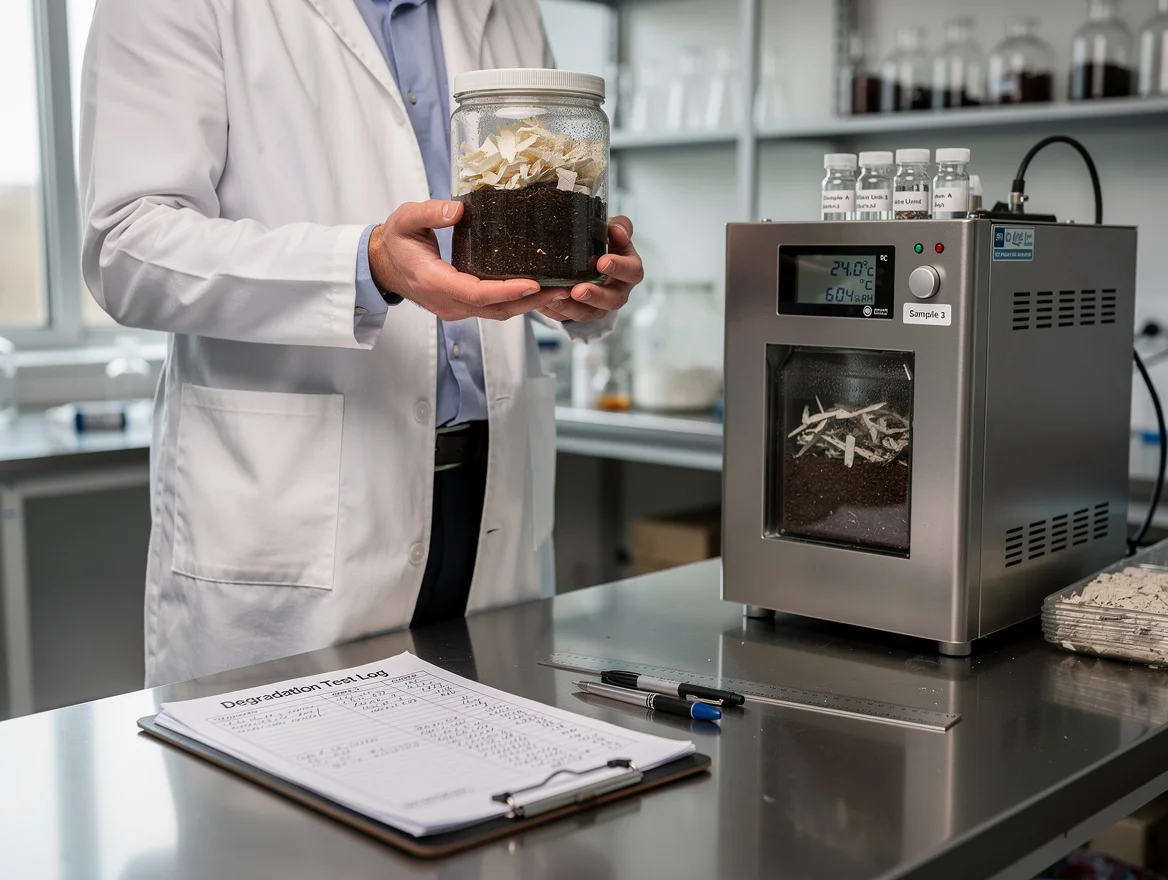
What EN 13432 Testing Actually Involves
Achieving certified compostability isn't simple or cheap:
Testing Requirements:
Disintegration Test (12 weeks)
Cost: £2,000-3,500
Process: Industrial composting simulation with active monitoring
Pass criteria: <10% residue on 2mm sieve
Biodegradation Test (6 months)
Cost: £3,000-5,000
Process: CO2 evolution measurement in controlled bioreactors
Pass criteria: ≥90% conversion to CO2
Ecotoxicity Test
Cost: £1,500-2,500
Process: Plant growth trials with compost containing test material
Pass criteria: ≥90% germination and biomass vs. control
Heavy Metals Analysis
Cost: £500-1,000
Process: Chemical analysis of material
Pass criteria: Levels below EN 13432 limits
Total Cost for Full EN 13432 Certification: £7,000-12,000 per product configuration
Timeline: 9-12 months from submission to certification
Important: Certification is product-specific. Changing coating thickness, paper substrate, or printing coverage requires re-testing.
Section 5: UK Composting Infrastructure Reality

The Harsh Truth About Industrial Composting
UK Industrial Composting Capacity (2024):
Approximately 250 industrial composting facilities
Total capacity: ~3 million tonnes annually
Primarily designed for food and garden waste
The Packaging Problem: Most facilities don't want certified compostable packaging:
Contamination Risk: Difficult to distinguish from non-compostable packaging
Processing Time: Packaging takes longer to break down than food waste
Quality Standards: Packaging residues affect compost quality certification
Economic Model: Food waste processing is profitable; packaging processing isn't
“We're certified to accept EN 13432 packaging, but we actively discourage it. Sorting complexity and extended processing time make it economically unviable.”- Composting Facility Manager, Midlands
Collection System Gap:
Most UK councils don't separate compostable packaging from food waste
No clear consumer guidance on disposal
Risk of contaminating recycling streams
Home Composting: Even More Complicated
Home Composting Reality:
4-5 million UK households have compost bins/heaps
Average temperature: 20-40°C (vs. 58-70°C industrial)
Variable moisture, irregular turning
Timeframe: 6-24 months
Product Performance: Materials certified "OK compost HOME" (higher standard than EN 13432) may still take 12+ months to fully degrade in typical UK home composting conditions.
Section 6: Decision Framework for Food Businesses
When Biodegradable/Compostable Makes Sense
Strong Use Cases:
Event Catering and Food Service
Controlled disposal environment
Can contract with commercial composters
Volume justifies collection logistics
Examples: Festival serviceware, stadium food packaging
Agricultural Applications
Direct soil incorporation possible
Outdoor degradation acceptable
Examples: Seed tapes, plant protection wraps
Niche Markets with Education Budget
Premium positioning
Customer base values sustainability
Willing to invest in consumer education
Examples: High-end delis, organic food brands
Poor Use Cases:
Mass-Market Retail
Consumer confusion about disposal
No collection infrastructure
Cost premium difficult to justify
Risk of contaminating recycling streams
Applications Requiring Extended Shelf Life
Compostable materials can degrade during storage
Moisture sensitivity issues
Examples: Long-shelf-life dried goods
When Recycling Is Available
Paper recycling is mature, effective, and economically viable
Why chase compostability when recycling works?
Section 7: Alternatives to Consider
Recyclable Paper: The Pragmatic Default
For most food applications, optimizing for recyclability delivers better environmental outcomes than compostability:
Advantages:
Established UK infrastructure (75% paper recycling rate)
Economic value keeps materials in system
Multiple recycling cycles possible
Lower cost than compostable alternatives
Design Principles:
Minimize coating coverage
Use recyclability-compatible coatings (avoid silicone where possible)
Water-based inks only
No mixed materials (paper + plastic laminations)
Home-Washable and Reusable
For specific applications, washable paper (actually cellulose-based reusable material) offers interesting properties:
Durability through 40-60 washing cycles
Biodegradable after service life
Premium positioning
Examples: Reusable food wraps, storage solutions
Section 8: Regulatory and Claims Guidance
UK Green Claims Code
The CMA (Competition and Markets Authority) provides clear guidance on environmental claims:
To claim "biodegradable":
Must specify timeframe and conditions
Must have robust evidence
Cannot imply rapid or complete degradation without proof
To claim "compostable":
Must specify industrial or home composting
Must state certification standard (EN 13432 or equivalent)
Must be accurate about disposal infrastructure availability
Example of Compliant Claims: "Industrially compostable to EN 13432 standard. Not suitable for home composting." "Biodegradable in industrial composting conditions within 12 weeks."
Examples of Non-Compliant Claims: "Eco-friendly biodegradable packaging" "Compostable" (without specifying industrial or home) "Breaks down naturally"
Conclusion: Making the Right Choice
After decades of working with food businesses on packaging sustainability, our advice is:
1. Start with the End in Mind What disposal infrastructure is actually available to your customers? Design for that reality, not an ideal future.
2. Recyclability First for Most Applications Unless you have specific reason to pursue compostability (controlled disposal, regulatory requirement, strong market positioning), optimize for recyclability.
3. If Pursuing Compostability:
Budget £10,000-15,000 for testing and certification
Specify industrial vs. home clearly
Have honest conversation with customers about disposal
Don't assume infrastructure exists
4. Be Honest in Your Claims Vague green claims harm your brand and the industry. Specificity and evidence protect you.
5. Partner with Knowledgeable Converters Not all paper converters understand the nuances. Ask about testing experience, coating options, and infrastructure knowledge.
Related Articles
Sustainable Paper Packaging: From Material Sourcing to End-of-Life - the pillar guide for this topic.
The Hidden Carbon Footprint of Paper Packaging - Honest carbon analysis from pulp to delivery - and why UK manufacturing cuts emissions 40-55% vs imported alternatives.
Beyond Recycling: Designing Paper Packaging for Circular Economy - Design for true circularity - UK EPR, MRF compatibility, contamination tolerance, and recyclability scoring.
Wax Coatings and Release Agents: Performance vs. Environmental Responsibility - Compare wax and release coatings - paraffin, PE, soy wax, beeswax, silicone - performance, cost, sustainability trade-offs.