

Sustainable Paper Packaging: From Material Sourcing to End-of-Life Solutions
Introduction: Beyond the Greenwashing
The paper packaging industry stands at a critical juncture. While plastic alternatives dominate sustainability conversations, the reality is more nuanced. Paper isn't automatically sustainable, and not all paper packaging is created equal. As a third-generation family business with over 50 years in paper converting, we've witnessed the evolution from simple kraft wrapping to today's sophisticated coated, printed, and functional paper products-and the corresponding evolution of what "sustainable" actually means.
This comprehensive guide examines sustainability across the entire lifecycle of paper packaging: from forest to converter to end-user to disposal or recycling. We'll address the hard questions that procurement managers, sustainability officers, and product developers actually need answered, not the marketing-friendly oversimplifications that dominate most content.
Section 1: Material Sourcing and Forest Stewardship

The FSC/PEFC Reality Check
Forest certification schemes-primarily FSC (Forest Stewardship Council) and PEFC (Programme for the Endorsement of Forest Certification)-form the foundation of sustainable paper sourcing. But certification alone doesn't tell the complete story.
What FSC/PEFC Actually Guarantee:
Chain of custody verification from forest to finished product
Prohibition of illegal logging and controversial sources
Protection of high conservation value forests
Compliance with ILO core labour conventions
Regular third-party auditing
What They Don't Guarantee:
Carbon neutrality (certified forests can still be net carbon sources during harvesting)
Local environmental impact minimization
Optimal transportation distances
Quality or longevity of fiber
At Grantham Manufacturing, we source 100% FSC-certified and 100% PEFC-certified base papers. But certification is our baseline, not our ceiling.
Virgin Fiber vs. Recycled Content: The Difficult Trade-offs
The assumption that recycled content is always more sustainable requires examination. Paper fibers degrade with each recycling cycle-typically sustaining 5-7 cycles before becoming too short for structural integrity. This creates three critical considerations:
1. Application Appropriateness Food-contact packaging faces stringent migration and contamination regulations. While recycled content can be used with appropriate barrier coatings, virgin fiber often provides superior safety margins, particularly for fatty or acidic foods.
2. Performance vs. Sustainability Balance Recycled kraft paper typically has 15-20% lower tensile strength than virgin kraft at equivalent weight. For applications requiring moisture resistance, grease barriers, or protective qualities, this often means using heavier-weight recycled paper, potentially negating material savings.
3. Recycling Infrastructure Reality The UK's paper recycling rate stands at approximately 75% (WRAP data, 2023). However, contamination from food residue, coatings, and mixed materials means much "recyclable" paper ends up in residual waste. Design for recycling matters more than recyclable materials.
Transportation's Hidden Carbon Cost
A 2022 study by the Ellen MacArthur Foundation found that transportation can account for 15-30% of packaging's total carbon footprint. For paper packaging, where the product-to-weight ratio is high, this becomes particularly significant.
As a UK-based converter located in Grantham with direct A1 access, our transportation footprint for UK customers is substantially lower than imported alternatives. Consider:
European imports: Average 800-1,200km road/ferry transport
Asian imports: 18,000-22,000km shipping plus UK distribution
UK manufacturing: Average 150-300km distribution distance for most customers
Section 2: The Coating and Printing Challenge

Not All Coatings Are Created Equal
Paper's functional performance-moisture resistance, grease barriers, release properties-typically requires coating. These coatings fundamentally alter recyclability and biodegradability. Here's the honest assessment of common coating technologies:
Wax Coatings (Paraffin and PE Wax)
Advantages: Excellent moisture barrier, food-safe, cost-effective
Disadvantages: Paraffin is petroleum-derived, PE wax contains polyethylene, both complicate recycling
Recyclability: Most UK mills can process wax-coated paper in pulpers with flotation systems, but not all
Biodegradability: Inhibits degradation significantly
Bio-Wax Alternatives
Advantages: Plant-derived (typically soy or beeswax blends), improved sustainability profile
Disadvantages: 20-40% cost premium, temperature sensitivity, performance trade-offs
Recyclability: Generally similar to traditional wax
Biodegradability: Improved but application-dependent
Silicone Release Coatings
Advantages: Superior release properties, essential for certain applications
Disadvantages: Difficult to remove in recycling, silicone contamination affects paper quality
Recyclability: Problematic-many mills reject silicone-coated paper
Biodegradability: Inhibits biodegradation
Aqueous/Dispersion Coatings
Advantages: Water-based, recyclable in most systems
Disadvantages: Limited barrier properties, higher cost, performance constraints
Recyclability: Excellent
Biodegradability: Generally good
Printing Inks and Food Safety
Food-contact paper packaging faces strict migration limits under UK and EU regulations. We use:
Water-based flexographic inks for most food applications
UV-curable inks for non-food-contact surfaces requiring durability
Migration-tested ink systems complying with Framework Regulation 1935/2004
The challenge: high-quality printing often requires primers and varnishes that affect recyclability. Every design involves trade-offs.
Section 3: Circular Economy and EPR Compliance

Understanding the 2024 EPR Revolution
The UK's Extended Producer Responsibility scheme, fully implemented in 2024, fundamentally changed packaging economics:
Key Requirements:
Packaging producers pay fees based on material type and recyclability
Modulated fees incentivize recyclable design
Data reporting obligations for all packaging
Compliance schemes manage fee collection
Financial Impact: Paper packaging fees are substantially lower than plastic (approximately £15-45/tonne vs. £200+/tonne for plastic), but only if designed for actual recycling.
Design for EPR Optimization:
To achieve favorable modulated fees, paper packaging must:
Use recyclable base materials (not all paper qualifies)
Minimize coating coverage or use recyclable coatings
Avoid mixed materials that prevent recycling
Use water-based inks and adhesives
Provide clear disposal instructions
We provide EPR assessment for all custom products, helping customers understand the full lifecycle cost including disposal fees.
The Contamination Problem
The paper industry's dirty secret: contamination is the primary barrier to circular economy success. Food residue, mixed materials, and incorrect disposal send recyclable paper to landfill or incineration.
Contamination Sources:
Food grease and residue (particularly problematic for fish, meat, and fast-food packaging)
Mixed plastic-paper laminates
Staples, tape, and other attachments
Incorrect consumer disposal
Our Approach: We're developing food-contact papers with "contamination tolerance"-designs that remain recyclable even with typical food residue. This includes:
Enhanced grease-resistant grades that release from fibers during pulping
Single-material constructions eliminating plastic contamination
Clear end-user communication about disposal
Section 4: Measuring True Environmental Impact
Beyond Carbon: A Holistic View
Carbon footprint dominates sustainability discussion, but paper packaging's environmental impact spans multiple dimensions:
Water Usage Paper manufacturing is water-intensive. Modern mills recirculate 90%+ of process water, but initial production still requires substantial fresh water. Kraft pulp production uses approximately 15-30 liters of water per kilogram of paper.
Chemical Inputs Bleaching, coating, and printing introduce chemicals. We prioritize:
Elemental chlorine-free (ECF) or totally chlorine-free (TCF) pulps
Water-based coating systems where performance allows
Low-VOC inks and adhesives
Energy Consumption Paper converting is energy-intensive. Our facility uses 40% renewable energy with targets to reach 75% by 2029.
Lifecycle Assessment: The Full Picture
We conduct simplified LCA for major product categories using the following boundaries:
Included:
Raw material extraction and processing
Transportation to our facility
Conversion energy and materials
Transportation to customer
End-of-life (recycling or disposal)
Excluded (due to complexity):
Capital equipment manufacturing impact
Facility construction
Employee commuting
Customer use-phase (minimal for packaging)
Section 5: Industry Standards and Certifications

Navigating the Certification Landscape
The sustainability certification ecosystem is complex and sometimes contradictory:
Material Certifications:
FSC/PEFC: Forest sourcing (discussed above)
Recycled Content Certification: Verifies percentage of post-consumer recycled fiber
Compostability (EN 13432): Industrial composting certification (rarely achieved for coated papers)
Facility Certifications:
ISO 14001: Environmental management system
BRCGS Packaging: Quality and safety (includes sustainability elements)
BRC/IOP Accreditation: Food contact compliance
Product-Specific:
EUPIA Exclusion List Compliance: Printing ink safety for food contact
Migration Testing: Demonstration of compliance with food safety limits
Biodegradability Testing: Per EN 13432, ASTM D6400, or ISO 14855
We currently hold BRC Packaging & Packaging Materials Issue 7 and are pursuing Chain of Custody 2027.
Section 6: The Future of Sustainable Paper Packaging
Emerging Technologies We're Watching
Barrier Coating Innovations
PLA (polylactic acid) coatings: Bio-based but industrially compostable only
PVOH (polyvinyl alcohol) dispersions: Water-soluble, excellent recyclability
Mineral-based barriers: Calcium carbonate and clay combinations
Digital Printing Advances Inkjet and toner-based digital printing enables:
Shorter runs reducing inventory waste
Variable data for track-and-trace
Elimination of printing plates (reducing chemical usage)
However, digital currently has higher per-unit cost and some food-contact limitations.
Functional Fibers Research into modified cellulose fibers with inherent barrier properties could eliminate coating requirements. Commercial viability remains 5-10 years away.
Regulatory Horizon
Upcoming Requirements:
Plastic Packaging Tax increases: Potential expansion to thin plastic coatings on paper
Right to Repair and Reuse: May extend to transit packaging requirements
Carbon Border Adjustment Mechanism (CBAM): Will increase cost of imported packaging materials
Deposit Return Schemes: Currently beverage-focused but potential expansion
Section 7: Practical Guidance for Procurement
Questions to Ask Your Converter
Not all sustainable packaging claims hold up under scrutiny. When evaluating paper packaging suppliers, ask:
Material Sourcing
What percentage of base paper is FSC/PEFC certified?
Do you conduct supplier audits beyond certification?
What's the average transportation distance for materials?
Coating and Printing
Which coating technologies do you offer and what are their recyclability profiles?
Are your inks migration-tested for food contact?
Can you provide technical data sheets with environmental data?
End-of-Life
Have products been tested for recyclability in UK infrastructure?
Do you provide EPR classification support?
What contamination tolerance do products have?
Facility Operations
What certifications do you hold and when were they last audited?
What percentage renewable energy do you use?
Do you publish sustainability metrics?
Innovation Capacity
Are you actively testing alternative coating technologies?
Can you conduct custom development for unique requirements?
What's your R&D investment as percentage of revenue?
Conclusion: Sustainability as Continuous Improvement
Sustainable paper packaging isn't a destination-it's a continuous improvement process. After 50+ years in the industry, we've learned that genuine sustainability requires:
Transparency about trade-offs: No solution is perfect
Measurement and accountability: What gets measured gets managed
Investment in R&D: Today's solutions won't be sufficient for tomorrow
Partnership with customers: Sustainable packaging requires sustainable specifications
Long-term thinking: Quarterly earnings pressure undermines sustainability investment
As a third-generation family business, we're building for the next 30+ years, not the next quarter. That perspective shapes every material sourcing decision, every capital investment, and every customer conversation.
The future of packaging isn't simply "paper instead of plastic." It's functional, recyclable, responsibly-sourced, and economically viable paper packaging designed for actual UK recycling infrastructure and real-world use conditions.
Related Articles
Five focused deep-dives that go further on each part of Sustainable Paper Packaging:
Biodegradability vs. Compostability: What Food Businesses Need to Know - Biodegradable vs compostable - critical differences, EN 13432 standards, coating impact, UK infrastructure reality.
The Hidden Carbon Footprint of Paper Packaging - Honest carbon analysis from pulp to delivery - and why UK manufacturing cuts emissions 40-55% vs imported alternatives.
Beyond Recycling: Designing Paper Packaging for Circular Economy - Design for true circularity - UK EPR, MRF compatibility, contamination tolerance, and recyclability scoring.
Wax Coatings and Release Agents: Performance vs. Environmental Responsibility - Compare wax and release coatings - paraffin, PE, soy wax, beeswax, silicone - performance, cost, sustainability trade-offs.
Measuring Sustainability: KPIs and Reporting Frameworks for Paper Packaging - Sustainability KPIs and reporting - carbon scope 1/2/3, water, waste, GRI/CDP/TCFD, science-based targets.
Continue exploring

Measuring Sustainability: KPIs and Reporting Frameworks for Paper Packaging
Comprehensive guide to sustainability metrics for paper packaging: carbon footprints, water usage, waste rates, certification frameworks, and reporting standards.

Wax Coatings and Release Agents: Performance vs. Environmental Responsibility
Technical deep-dive into wax coatings for paper packaging. Paraffin, PE, bio-wax alternatives, silicone release agents - performance trade-offs, costs, and recyclability.
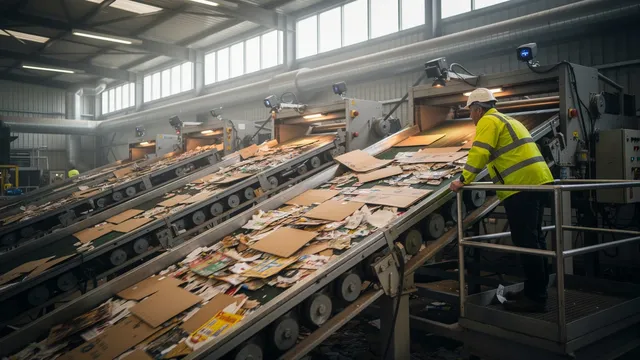
Beyond Recycling: Designing Paper Packaging for Circular Economy
Master circular economy principles for paper packaging. UK EPR regulations, design for recycling strategies, and avoiding contamination pitfalls.
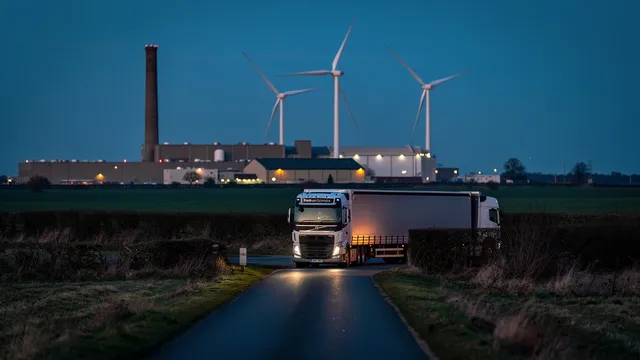
The Hidden Carbon Footprint of Paper Packaging
Detailed carbon analysis of paper packaging from pulp to delivery. Why UK manufacturing reduces emissions vs. imported alternatives, with verified data.
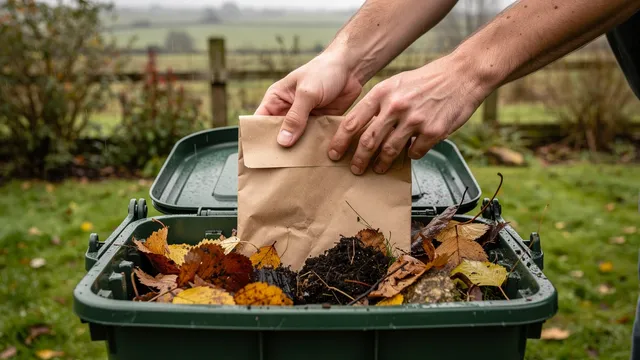
Biodegradability vs. Compostability: What Food Businesses Need to Know
Confused about biodegradable vs. compostable paper packaging? Critical differences, EN 13432 standards, and how coatings affect breakdown for food applications.