
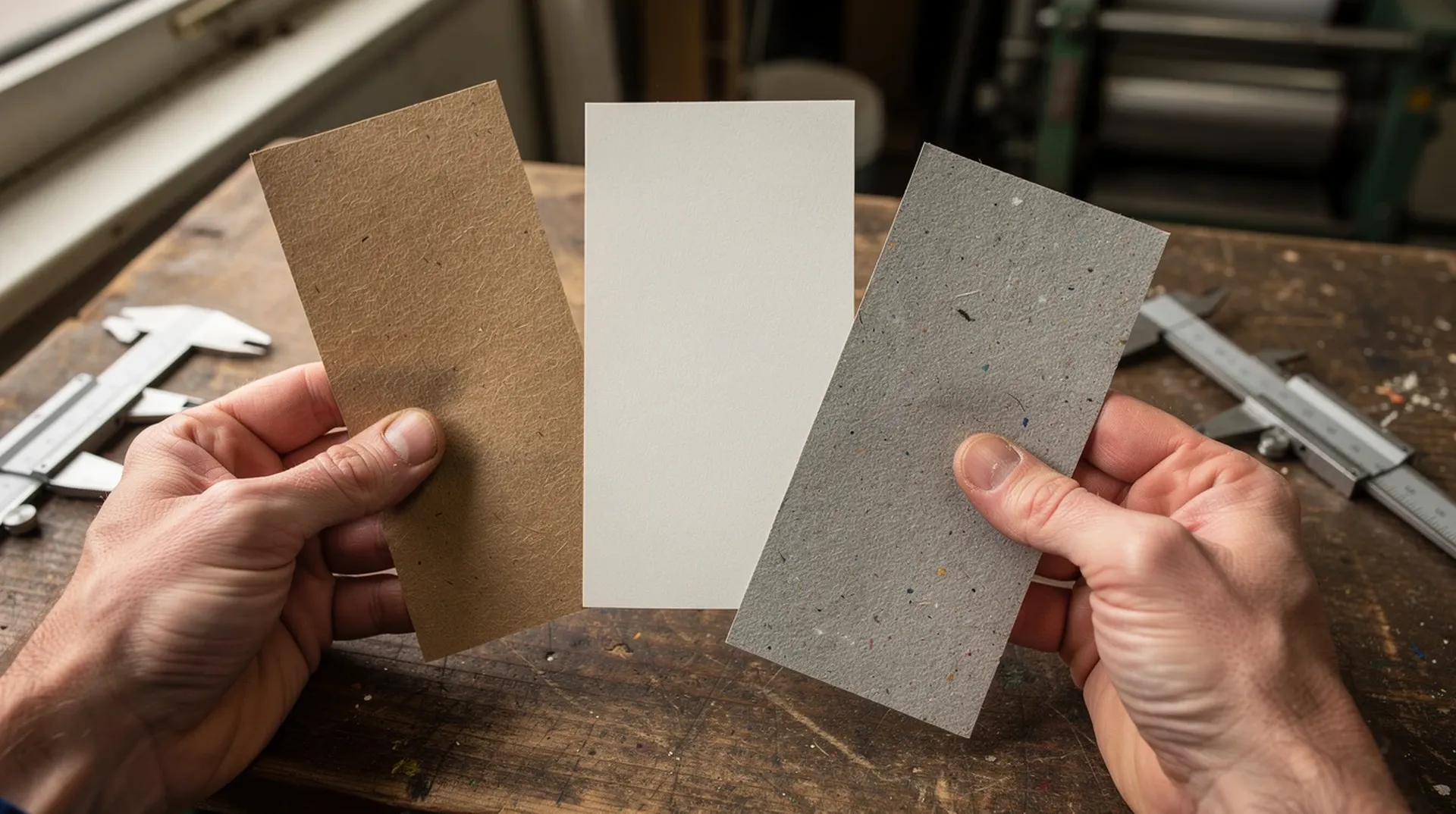
Paper Grades and Properties: A Material Selection Guide for Packaging Applications
Introduction: Matching Material to Application
Paper selection for packaging applications involves balancing numerous factors: structural requirements, printing needs, converting compatibility, barrier properties, sustainability credentials, and cost constraints. The diversity of available grades-each optimised for specific property combinations-creates both opportunity and complexity for specifiers.
Poor paper selection leads to converting problems, functional failures, excessive cost, or sustainability compromises. Effective selection requires understanding how paper composition and manufacturing influence properties, and how those properties relate to application requirements.
This guide examines major paper grade categories for packaging, their characteristic properties, and frameworks for matching materials to applications.
Understanding Paper Composition and Structure
Fibre Sources and Their Influence
Paper properties begin with fibre selection:
Softwood fibres (pine, spruce, fir) provide length (2-4mm) and strength. High softwood content delivers tensile and tear strength essential for web converting and structural applications. Papers requiring good fold endurance or tear resistance typically specify significant softwood content.
Hardwood fibres (eucalyptus, birch, oak) are shorter (0.8-1.5mm) but more numerous per unit weight. Hardwood content improves formation (fibre distribution uniformity), opacity, and surface smoothness. Papers prioritising printability or surface quality incorporate substantial hardwood.
Recycled fibres vary dramatically based on source. High-quality recycled pulps from controlled sources approach virgin fibre performance; lower grades containing mixed waste deliver reduced strength and potentially higher contaminant levels. Recycled content provides sustainability benefits but requires quality verification.
Non-wood fibres (cotton, bamboo, bagasse, hemp) serve specialty applications. Cotton delivers exceptional fold endurance for bank notes and fine papers; bamboo provides rapid-renewable sourcing; bagasse utilises agricultural waste. These fibres typically carry cost premiums and may present processing differences.
Chemical and Mechanical Processing
Pulping method fundamentally affects fibre properties:
Chemical pulping (kraft process) removes lignin while preserving fibre length and strength. Kraft pulps provide maximum strength per unit weight, essential for structural applications. Bleached kraft offers brightness and purity for food contact and premium visual appearance.
Mechanical pulping retains most of the wood substance, including lignin. Mechanical pulps yield significantly higher (2-3×) fibre mass per unit wood but with reduced strength. The retained lignin causes yellowing upon light exposure, limiting mechanical pulp use to applications without brightness stability requirements.
Semi-chemical pulping offers intermediate properties-better strength than mechanical pulps with higher yield than chemical pulps. These pulps suit applications balancing cost against strength requirements.
Additives and Treatments
Paper properties are modified through extensive chemical additions:
Sizing agents (AKD, ASA, rosin) control liquid penetration. Sizing level dramatically affects printing behaviour, moisture sensitivity, and barrier properties. Specification typically references Cobb values (water absorption) or sizing degree tests.
Fillers (calcium carbonate, clay, titanium dioxide) increase opacity and brightness while reducing cost. However, filler content reduces strength and may affect coating adhesion. Typical filler levels range from 5-25% depending on grade requirements.
Strength additives (starch, synthetic polymers) enhance fibre bonding. Internal strength additives improve tensile and burst; surface strength additives resist picking during printing and converting.
Wet strength agents provide strength retention when wet-essential for applications involving liquid contact or high humidity exposure.
Major Paper Grade Categories

Kraft Papers
Kraft papers are manufactured from chemical pulp emphasising strength:
Natural kraft (unbleached) retains lignin's brown colour while delivering maximum strength efficiency. Typical basis weights range from 40-150 gsm. Applications include wrapping, multiwall bags, and cushioning materials where strength-to-weight ratio dominates requirements.
Property ranges for packaging-grade natural kraft:
Tensile index MD: 80-120 Nm/g
Tear index: 8-14 mNm²/g
Stretch at break: 2-4% MD, 5-8% CD
Porosity: 50-200 ml/min (Bendtsen)
Bleached kraft offers visual brightness with good strength retention. Bleaching reduces strength 10-15% compared to equivalent unbleached grades. Applications requiring food contact, printing, or aesthetic appearance typically specify bleached kraft.
Machine-finished (MF) kraft receives calendering for improved surface smoothness, enabling better printing at the expense of some bulk and stiffness.
Machine-glazed (MG) kraft is dried against a large polished cylinder (Yankee dryer), creating one smooth, glossy surface with the reverse remaining rough. This grade suits applications requiring one printable surface, such as wrapping papers and bags.
SBS and FBB Cartonboards
Premium folding cartonboard grades combine strength, stiffness, and print surface quality:
Solid Bleached Sulphate (SBS) uses 100% virgin bleached chemical pulp throughout all layers. SBS delivers:
Excellent brightness and visual appearance
Consistent, high-quality printing surface
Good bending stiffness per unit weight
Premium food contact compliance
Typical specifications for packaging-grade SBS:
Basis weight: 200-400 gsm
Brightness: 85-92% ISO
Bending stiffness MD: 10-25 mNm (varies with caliper)
Surface smoothness: <2.0 μm PPS
Folding Box Board (FBB) employs multi-layer construction with chemical pulp outer layers surrounding mechanical or chemi-thermomechanical pulp (CTMP) middle layers. This construction optimises:
Surface quality for printing
Bulk and stiffness efficiency
Cost competitiveness
FBB typically provides 15-25% higher stiffness-to-weight ratio than SBS at reduced cost, making it the dominant grade for folding carton applications where food contact requirements permit.
Coated vs. uncoated variants exist within both SBS and FBB categories. Coating (typically clay-based at 10-25 gsm per side) dramatically improves print quality and surface uniformity at additional cost.
Recycled Papers and Boards
Recycled grades serve applications where sustainability credentials and cost competitiveness outweigh premium performance requirements:
Testliner uses recycled fibre for corrugated board liners. Performance grades from poor (T4) to good (T1) reflect fibre quality and strength. Most testliner grades achieve 70-85% of equivalent kraft liner strength.
Chipboard (grey board, millboard) uses mixed recycled fibre for applications prioritising bulk and cost over strength or appearance. Common uses include backing boards, box inserts, and book covers.
Recycled folding boxboard combines recycled middle layers with virgin outer layers, balancing sustainability content with surface quality requirements.
Specialty and Functional Papers
Application-specific grades address particular requirements:
Greaseproof papers achieve grease resistance through extensive mechanical refining that collapses paper structure into a dense, less porous sheet. True greaseproof papers resist oil penetration without coatings, making them naturally compostable.
Glassine takes greaseproof further through supercalendering, creating a dense, translucent sheet with moisture barrier properties. Applications include envelope windows, release liners, and food interleaving.
Wet-strength papers incorporate resins that maintain paper strength when wet. These grades suit applications involving liquid contact: wrapping wet products, outdoor exposure, or high humidity environments. Wet strength treatment affects recyclability-verify compatibility with intended end-of-life pathway.
Silicone base papers are specifically engineered for silicone coating, with controlled porosity, surface chemistry, and dimensional stability. Using standard papers for silicone coating typically causes coating defects and release inconsistency.
Property Specifications for Applications
Structural Packaging Requirements
Applications requiring physical protection demand specific property combinations:
Primary protection packaging (product cushioning, void fill):
Tear strength: prevents packaging fragmentation
Stretch: absorbs impact energy
Bulk: provides cushioning thickness
Critical spec: tear index >8 mNm²/g, stretch CD >5%
Secondary packaging (folding cartons, sleeves):
Bending stiffness: maintains structure under load
Compression strength: stacking performance
Crease performance: clean folds without cracking
Critical spec: define stiffness requirements using bending moment per unit width
Tertiary packaging (shipping cases, palletisation):
Edge crush resistance: stacking strength
Flat crush resistance: impact protection
Moisture resistance: performance maintenance
Critical spec: ECT and BCT values for anticipated stacking conditions
Print Quality Requirements

Printing applications impose specific surface and structural demands:
Flexographic printing:
Surface smoothness: adequate ink transfer
Porosity: controls ink penetration
Surface strength: prevents picking
Critical spec: Parker Print-Surf <6 μm for process colour; <10 μm for solid/line work
Offset printing:
Surface strength: resists tacky inks
Moisture resistance: dimensional stability
Coating receptivity: for coated grades
Critical spec: IGT pick >1.2 m/s; Cobb60 <30 gsm for uncoated
Digital printing:
Surface chemistry: toner adhesion
Porosity: for inkjet ink absorption
Dimensional stability: registration accuracy
Critical spec: varies by digital technology-verify compatibility with specific equipment
Barrier and Functional Requirements
Barrier applications require specific property verification:
Moisture barrier:
WVTR testing at relevant conditions
Coating integrity across converting operations
Seal compatibility if applicable
Critical spec: WVTR expressed as g/m²/24h at specified temperature/humidity
Grease/oil barrier:
Kit test rating for anticipated oil types
Barrier maintenance after creasing/folding
Food contact compliance
Critical spec: Kit rating ≥8 for most food applications; ≥10 for aggressive oils
Oxygen barrier (limited for paper):
OTR measurement for coated/laminated structures
Typically requires polymer coating for significant barrier
Critical spec: application-specific based on product sensitivity
“The most common specification error is defining properties in isolation without considering converting and end-use conditions. A paper that tests beautifully flat performs differently after printing, coating, die-cutting, and months of warehouse storage.”- Packaging Technologist
Selection Criteria Framework
Application Analysis
Systematic selection begins with comprehensive requirement definition:
End-use environment:
Temperature range (storage and transport)
Humidity exposure
Light exposure
Chemical contact (food, products, cleaning agents)
Structural requirements:
Loads to be supported
Impact/vibration exposure
Stacking conditions
Handling stresses
Converting operations:
Printing method and coverage
Coating applications
Die-cutting complexity
Folding and gluing requirements
Filling line compatibility
Regulatory requirements:
Food contact status
Product-specific regulations (pharmaceutical, cosmetic)
Environmental claims
Certification requirements
Specification Development

Translate requirements into measurable specifications:
Critical properties that must be achieved without compromise:
Regulatory requirements (e.g., food contact compliance)
Functional requirements (e.g., minimum barrier levels)
Converting requirements (e.g., minimum strength for web handling)
Target properties with acceptable ranges:
Print quality parameters
Structural properties with defined tolerances
Aesthetic properties
Desirable properties that improve performance without being essential:
Enhanced sustainability credentials
Superior processing characteristics
Premium appearance attributes
Supplier Qualification
Material selection extends to supplier capability verification:
Technical capability:
Consistent achievement of specifications
Process control systems
Testing and quality certification
Technical support capability
Commercial factors:
Supply reliability and lead times
Volume flexibility
Price stability and competitiveness
Geographic considerations
Sustainability credentials:
Fibre sourcing certification
Manufacturing environmental performance
End-of-life pathway compatibility
Transparency and documentation
Common Selection Challenges
Cost vs. Performance Trade-offs
Budget constraints often require optimisation rather than maximisation:
Identify minimum acceptable performance for each property based on actual failure modes, not safety margins inherited from previous specifications.
Evaluate total cost, including waste, rework, complaints, and processing issues-not just material purchase price. A cheaper paper that causes 5% additional waste costs more than a reliable premium grade.
Consider alternative approaches such as lighter basis weights with better forming, functional coatings instead of inherent properties, or structural redesign enabling different material specifications.
Sustainability vs. Performance
Environmental objectives sometimes conflict with traditional performance:
Recycled content may reduce strength and consistency. Evaluate actual requirements-many applications tolerate recycled content impacts.
Barrier treatments may affect recyclability. Newer bio-based coatings offer improving performance with recyclability compatibility.
Weight reduction decreases material use but may affect protection performance. Systematic lightweighting with performance validation achieves genuine environmental benefit.
Certification requirements may limit supplier options or increase costs. Understand what certifications genuinely matter for your application versus general preferences.
Converting Compatibility
Paper selection must consider the entire converting chain:
Web handling requires sufficient strength and stretch to run at production speeds without breaks.
Printing demands appropriate surface properties for the specific printing process.
Coating application depends on porosity, surface energy, and dimensional stability.
Die-cutting performance relates to caliper consistency, fibre bonding, and grain direction.
Folding and gluing require crease performance and adhesive compatibility.
Conclusion: Selection as Engineering Discipline
Paper selection for packaging deserves engineering rigour equivalent to any material specification process. The diversity of available grades creates opportunity to optimise for specific applications-but realising that opportunity requires systematic analysis of requirements, understanding of material properties, and verification of performance across converting and end-use conditions.
Effective selection balances multiple competing factors: performance requirements against cost constraints, sustainability objectives against functional demands, specification precision against supply flexibility. There are rarely perfect solutions-only well-reasoned compromises that best serve the overall application needs.
The most successful approaches treat material selection as ongoing optimisation rather than one-time specification. Continuous monitoring of performance, regular reassessment of alternatives, and systematic feedback from converting and end-use inform evolving specifications that improve over time.
Related Articles
Paper Converting: How Printing, Coating, and Finishing Transform Packaging Performance - the pillar guide for this topic.
Paper Coating Technologies: Wax, Silicone, and Heat-Seal Applications - Compare wax, silicone, and heat-seal coating systems - barrier properties, application methods, end-use suitability.
Die-Cutting and Precision Manufacturing in Paper Converting - Rotary vs flatbed die-cutting, tooling selection, tolerance management, and quality control for precision conversion.
Flexographic Printing for Food-Safe Paper Packaging - Food-safe flexo printing - inks, migration testing, print quality, UK and EU regulatory compliance.